Pallade Veneta - 2026 S-Class starry facelift

2026 S-Class starry facelift


2026 S-Class starry facelift

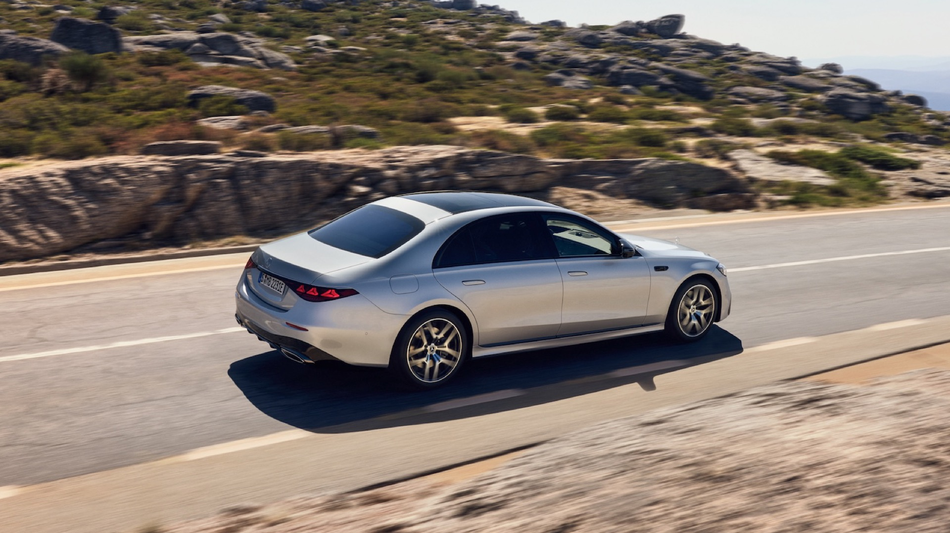
When Mercedes‑Benz unveiled the 2026 S‑Class, it was clear that this was no ordinary facelift. Engineers replaced or refined more than 2,700 components, meaning over half of the vehicle is new. The changes begin on the outside: a 20 percent larger grille filled with hot‑stamped chrome stars projects a grander presence, while the traditional hood ornament now illuminates as part of the car’s striking light signature. Mercedes’ trademark three‑pointed star motif also appears in the headlights and taillights, underscoring the brand identity with refined opulence. Optional 20‑inch cross‑spoke wheels use high‑pressure casting to reduce weight and material consumption, and customers can choose from more than 150 paint colours.

Digital light and starry illumination
Lighting technology takes centre stage on the facelifted S‑Class. New micro‑LED Digital Light headlamps cut energy consumption in half while offering ultra‑range high beams that illuminate up to 600 metres ahead. The headlamps and taillamps embed miniature three‑pointed stars in their lenses, and the lights can project patterns such as welcome animations or warnings for oncoming drivers. These lamps are paired with a 20 percent larger grille outlined by a luminous frame and an illuminated bonnet star. At the rear, triple‑pod taillights with a star pattern and chrome accents contribute to a wider stance.

An interior defined by screens and AI
Inside, the S‑Class adopts the MBUX Superscreen architecture. A 14.4‑inch central display is flanked by twin 12.3‑inch screens—one for the driver and another for the front passenger—forming a sweeping glass surface. Rear passengers enjoy two 13.1‑inch high‑definition displays with built‑in cameras. Mercedes’ latest software platform, MB.OS, underpins the cabin: it unifies navigation, vehicle systems and voice assistants. Generative AI powers the “Hey Mercedes” virtual assistant, enabling complex dialogue through voice assistants based on ChatGPT‑4o and Google Gemini. Navigation relies on Google Maps‑based data to provide real‑time traffic and 3‑D surroundings. Even the air vents are electronically controlled through Digital Vent Control, and an updated Energizing Air Control system filters cabin air for maximum purity.

Comfort innovations
Although the cabin brims with screens, Mercedes preserved its luxurious ambience. Heated seatbelts can warm occupants to 44 °C (111 °F), while detachable remote controls allow rear passengers to adjust seat functions, climate and entertainment. The expanded Manufaktur programme offers nearly 50 bespoke paint finishes and 25 leather options, emphasising individuality. The interior retains high‑quality materials and adds Digital Vent Control for precise airflow. Mercedes has also equipped up to 10 external cameras, five radar sensors and twelve ultrasonic sensors, enabling advanced driver assistance and environment awareness.

Handling and suspension
The 2026 S‑Class comes standard with rear‑wheel steering that turns the rear wheels up to 4.5 degrees, reducing the turning circle by nearly two metres. Buyers can upgrade to an optional 10‑degree system for even tighter manoeuvrability. E‑Active Body Control, an active suspension that reads the road ahead, uses cloud‑sourced Car‑to‑X data to adjust damping at each wheel and can lift the car within milliseconds to mitigate side‑impact forces. This predictive suspension works alongside AIRMATIC air springs and electronically controlled dampers, delivering a blend of comfort and agility.

Change text size:

Engines and electrification
Mercedes offers a broad powertrain portfolio, all featuring a 17 kW integrated starter generator and a 48‑volt mild‑hybrid system. The M256 Evo 3.0‑litre inline‑six petrol engine increases torque to 600 Nm, with a temporary overtorque function lifting output to 640 Nm. The OM656 Evo diesel introduces an industry‑first electrically heated catalytic converter to reach optimal operating temperature more quickly, reducing cold‑start emissions. For enthusiasts, the M177 Evo 4.0‑litre V8 now uses a flat‑plane crankshaft, producing 537 hp and 750 Nm of torque while promising smoother, quieter operation. A plug‑in hybrid version pairs the six‑cylinder petrol engine with an electric motor to deliver up to 577 hp and 750 Nm and offers an electric‑only range exceeding 100 km.

Safety and lighting technology
Safety remains central to the S‑Class ethos. The MB Drive Assist Pro system uses the vehicle’s cameras, radar and ultrasonic sensors to support highly automated driving, with China receiving the feature first. The updated model includes PRE‑SAFE® Impulse seat belt pretensioners, dual‑stage airbag inflators, and up to 15 airbags, including a rear airbag designed to reduce head and neck loads during severe frontal impacts. Digital Light technology adds functions like lane‑construction guidance, cold‑weather warnings that project snowflake symbols onto the road, and improved construction‑zone lighting. This technology was refined in a state‑of‑the‑art light tunnel over 100 metres long, enabling Mercedes to simulate real‑world conditions.

Balancing heritage and innovation
The 2026 S‑Class demonstrates Mercedes‑Benz’s ability to merge tradition with cutting‑edge technology. While its star‑embellished grille and illuminated emblem celebrate heritage, the adoption of MB.OS, generative AI and predictive suspension systems signal a bold future. By revising more than half of its parts, enhancing powertrains to meet Euro 7 standards, and expanding digital and safety features, the facelifted S‑Class reasserts itself as the benchmark for luxury sedans. In an era when SUVs dominate and competition intensifies, Mercedes’ flagship proves that continuous innovation, coupled with artisanal craftsmanship, can keep a sedan at the pinnacle of automotive excellence.

Featured

Cayenne Turbo Electric 2026

With the Cayenne Turbo Electric, the Stuttgart-based sports car manufacturer is finally entering the age of fully electric SUVs. Back in 2002, the Cayenne was the model with which Porsche conquered the luxury off-road vehicle segment. With the fourth generation, a pure battery-powered vehicle is now available for the first time. Two variants will be launched in spring 2026: the Cayenne Electric and the top-of-the-range Cayenne Turbo Electric. Both feature all-wheel drive with one permanently excited synchronous motor per axle. The electric Cayennes are longer and wider than the previous models, yet still offer the characteristic silhouette with a low bonnet, curved roofline and striking fenders.Supercar-level performance and driving dynamicsIn the Turbo version, the E-Cayenne delivers a system output of up to 850 kW (1,156 hp) when the start or ‘push-to-pass’ function is activated. In normal operation, 630 kW (857 hp) is available; an additional boost of 130 kW (176 hp) can be called up for ten seconds at the touch of a button. The maximum torque is 1,500 Nm. With this power, the SUV, which weighs just under 2.72 tonnes, sprints to 100 km/h in 2.5 seconds and reaches 200 km/h in just 7.4 seconds. The top speed is 260 km/h. The standard Cayenne Electric achieves 300 kW (408 hp) in normal driving mode and 325 kW (442 hp) with the aid of Launch Control. It accelerates from 0–100 km/h in 4.8 seconds and reaches a top speed of 230 km/h. Both versions feature electronic Porsche Traction Management (ePTM), which regulates the power distribution between the front and rear axles in milliseconds.

Alfa Tonale 2026: With a new look

Alfa Romeo has given its Tonale compact SUV, launched in 2022, a very subtle but effective update. Three years after its debut, the designers are drawing on Alfa's typical heritage and sharpening its profile: The front now features a more pronounced, concave Scudetto radiator grille, which references the historic ‘33 Stradale’ with horizontal struts. The grille is flanked by a redesigned front apron, in which a wider air intake and side openings give the Tonale a more dynamic look. Alfa Romeo has also shortened the front overhang and widened the track, giving the car a more muscular appearance. Newly designed alloy wheels in sizes ranging from 17 to 20 inches and fresh paint finishes – including Rosso Brera, Verde Monza and Giallo Ocra – underline the refreshed look.Interior: new colours, more comfortThe interior also benefits from ‘a little cosmetic surgery’. Alfa Romeo is expanding its range with new colours and materials. In addition to the familiar black fabric and leather upholstery, bright red leather seats or a two-tone combination of white imitation leather and black Alcantara are available for the first time. A new ‘Cannelloni’ seat design with pronounced cross-beading is reminiscent of the sports seats from the 1960s. Perforated Alcantara upholstery with white or ‘Ice’ contrast stitching is available for the Sport Speciale variant; the dashboard is also trimmed in Alcantara. LED ambient lighting in various colours, including a serpentine pattern paying homage to the coat of arms of Milan, further enhances the cockpit. In Europe, a flat rotary knob replaces the previous gear lever, while the US version retains a classic gear selector – both variants feature large aluminium paddle shifters on the steering wheel. The infotainment system includes a 10.3-inch touchscreen and a 12.3-inch digital speedometer; a 360-degree camera, wireless charging and a Harman Kardon sound system are available as options.

BMW 7 Series and i7: facelift in 2026

The seventh generation of the BMW 7 Series will be presented in a comprehensively revised form from 2026. We have created a graphic preview in the form of a photo, but whether this corresponds to reality is still questionable, to say the least. Around four years after the series made its debut, the Munich-based manufacturer's flagship model will undergo a so-called life cycle impulse, which offers much more than just cosmetic changes. The first prototypes, which were spotted on test drives around the Nürburgring, reveal that BMW is becoming bolder in its design: the striking double kidney grille remains divided into two parts, but appears lower and less bulky thanks to horizontal bars. In addition, the narrow daytime running lights have been redesigned into more delicate daytime running light clips. The rear end will feature a clearer, horizontal light signature based on the design of the 5 Series. Four trapezoidal tailpipes reveal that powerful combustion engines will continue to be used, while an extended body variant is unnecessary as the current G70 model already comes with a long wheelbase as standard.In the interior, BMW is focusing on a technological revolution. The new Panoramic iDrive – a further development of the classic head-up display – projects driving-related information across the entire width of the windscreen, largely replacing the conventional instrument cluster. The driver operates the system via a central touch display with Quick Select logic and a new multifunction unit on the steering wheel, whose buttons provide haptic feedback. Together with the optional 3D projection in the driver's field of vision, the system enables intuitive, distraction-free operation. Another highlight is the integration of innovations from the ‘New Class’, which BMW will gradually roll out in all model series from 2025 onwards. These include more connected on-board electronics and more powerful computers, which are a prerequisite for new Level 3 assistance systems. Additional sensors in the front apron indicate the use of the Personal Pilot system, which is designed to enable temporary autonomous driving in defined situations.

Lucid Gravity 2026: Test report

The new electric SUV from a US manufacturer combines the range of a saloon car with the elite space of a van. An extensive winter test covering 8,000 kilometres in Europe, in which pre-production vehicles travelled from the Munich development centre to the Arctic Circle, confirms this high and fulfilled claim. The development team examined both performance on unlimited motorway sections and charging at three-phase European AC connections and state-of-the-art fast charging stations. In extreme cold and summer heat, the interaction of drive, charging performance and comfort was tested to meet the expectations of European customers.Design and spaceWith a length of around 5.03 metres, a wheelbase of over 3.3 metres and a drag coefficient of 0.24, the SUV is surprisingly aerodynamic despite its imposing dimensions. The flat silhouette and flush-mounted door handles emphasise its elegant appearance. The raised windscreen extends seamlessly over the passengers' heads and, together with the panoramic glass roof, creates an airy feeling of space. Depending on the configuration, the vehicle can seat five to seven adults. The second row of seats can be folded electrically into the floor; individual seats will also be available in future. An additional storage compartment under the front bonnet – known as the frunk – has a capacity of 227 litres and can be converted into a bench seat thanks to upholstery. When the rear seats are folded down, the load volume increases to up to 3,450 litres.

Change text size: