Pallade Veneta - Small, efficient and revolutionary: The IPOP electric car from Alsace

Small, efficient and revolutionary: The IPOP electric car from Alsace


Small, efficient and revolutionary: The IPOP electric car from Alsace

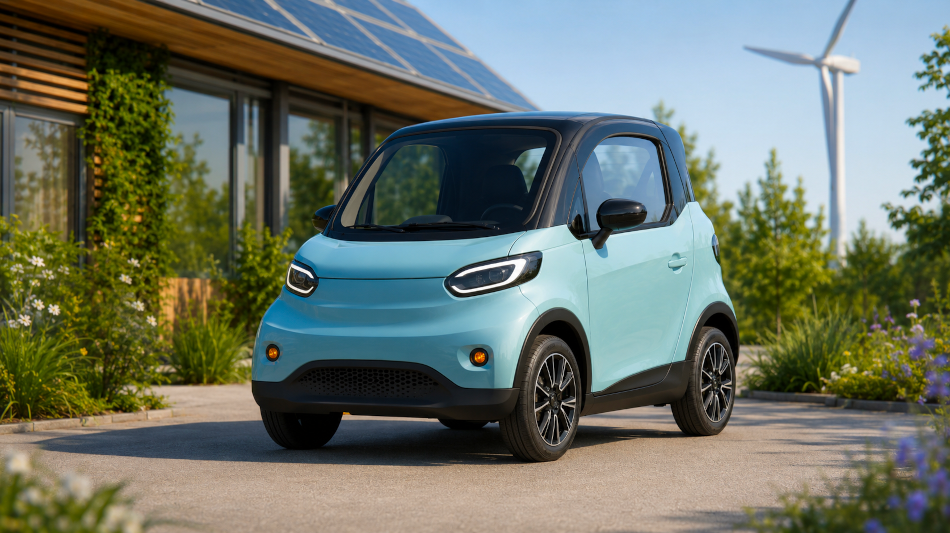
In early May 2026, the French start‑up IPOP Automobiles unveiled a prototype of its mini electric car at the National Automobile Museum in Mulhouse. Nicknamed IPOP, the vehicle breaks with conventions: instead of a central motor, each wheel houses its own electric motor. The company promises that nearly all components are manufactured in France, with battery cells from China being the only exception.

Visually, the IPOP resembles a hybrid of a beach buggy and a golf cart. It can be configured as a two‑ or four‑seat vehicle, with open or enclosed bodywork, and with either two‑ or four‑wheel drive. Inventor Christophe Winkelmuller believes that wheel‑hub motors are the next big leap in vehicle electrification, comparable to the battery revolution of the past decade. By eliminating bulky drivetrains, the wheel motors are intended to save space and increase efficiency.

Change text size:

IPOP Automobiles plans two models: IPOP 45 and IPOP 90. The IPOP 45 is a light quadricycle limited to 45 km/h and intended for drivers from 14 years of age, while the IPOP 90 seats four, reaches 90 km/h and offers optional all‑wheel drive. The car uses 15‑kW (~20 hp) wheel motors and 48‑V lithium‑iron‑phosphate batteries, giving an estimated range of 135 km and a recharge time of 4–5 hours. The unladen weight ranges from 500–600 kg, and the boot capacity is 350 litres.

According to the manufacturer, prices will start at €11 000 for the IPOP 45, rising to €15 000 (around €17 000 with four‑wheel drive) for the IPOP 90. Assembly takes place near Colmar, and virtually all parts are sourced locally to support Alsatian suppliers. The prototype is not yet road‑approved; IPOP Automobiles hopes to deliver the first customers in 2027.

With European manufacturers facing intense competition and supply‑chain challenges, the IPOP’s emphasis on local production and affordability offers hope. Its compact, modular design could provide an accessible alternative to heavy quadricycles and help broaden the appeal of electric mobility.

Featured

Leggett & Platt Automotive Launches New Brand Identity: Leggett Dynamics

ACCELERATES INNOVATION & GROWTH IN COMFORT, MOTION & SOFTWARE INTEGRATED SYSTEMS

Toyota bZ7: Luxury EVs in China

The Toyota bZ7 is shaking up China’s electric luxury car segment. Developed jointly by Toyota and GAC, the five‑meter sedan is built exclusively for the Chinese market and measures roughly 5,130 mm long and 1,965 mm wide, similar to a Tesla Model S. Pricing starts at about 147,800 yuan (approximately US$21,500) and runs up to 199,800 yuan across five trim levels.The bZ7 showcases cutting‑edge technology. Its cockpit features Huawei’s HarmonyOS 5.0 interface on a 15.6‑inch touchscreen, complemented by an 8.8‑inch digital cluster and a 27‑inch head‑up display. Voice control recognizes multiple zones and commands, yet physical buttons remain for key functions. Momenta provides the R6 ADAS suite, combining LiDAR and 26 other sensors to deliver highway and urban navigation on autopilot plus automated parking without subscription fees.Passengers enjoy ventilated, heated and massaging seats, while the front seats use a zero‑gravity design for comfort. Dual‑chamber air suspension and a road‑preview system give a refined ride.

AC Schnitzer: When Iconic Tuners Fall Silent

The announced end of AC Schnitzer by the close of 2026 is far more than the disappearance of a well-known tuning brand. It is a warning signal with meaning far beyond the BMW enthusiast scene. When a company that for decades stood for sporty BMW refinement, forged wheels, suspension upgrades, exhaust systems and a distinctly German form of engineering passion can no longer operate its manufacturing and tuning business economically in Germany, the issue is no longer just about one brand. It becomes a question about Germany as an automotive business location. AC Schnitzer therefore turns into a symbolic case: one that reflects weakening competitiveness, a cost structure that has become increasingly hard to carry and a growing public impression that politics is reacting too slowly, too cautiously and too late.That is why the topic strikes such a deep emotional nerve. AC Schnitzer was never merely a supplier of aftermarket parts. The company represented an entire culture of refinement, balancing factory-like elegance with a more rebellious edge. For many BMW fans, it was part of the national automotive landscape: Aachen, BMW, motorsport associations, complete vehicle programs, distinctive forged wheels, aerodynamic components, performance kits and memorable special builds. In that sense, the end of AC Schnitzer is not simply a balance-sheet story. It is also the loss of a piece of industrial identity.The reasons behind the closure are revealing because they expose exactly the chain of problems that German industry has been discussing for years. At the core lies a toxic mix of rising development and production costs, slow approval procedures, intensifying international competition and shifting demand. The most striking point is the complaint about the length of the German approval system. If aftermarket parts reach the market many months after foreign competitors have already launched theirs, a specialist niche player loses precisely what matters most: timing, visibility and margins. On top of that come more expensive raw materials, volatile exchange rates, supplier disruptions, tariffs in important export markets, hesitant consumer spending and the gradual decline of the combustion-engine culture that once fueled large parts of the tuning scene. AC Schnitzer is therefore not describing a single isolated problem, but a concentration of structural burdens.

Maybach: Between Glory and a Turning Point

The new Mercedes-Maybach S-Class is far more than a carefully polished update of a familiar ultra-luxury limousine. It arrives at a moment when Mercedes is sharpening the very top of its portfolio, comprehensively modernizing the S-Class and expanding Maybach into a distinct luxury universe that now stretches from chauffeur-driven saloon to electric SUV and exclusive roadster. That is precisely why this model matters. The new Maybach is meant to feel more digital, more individual and more visibly luxurious, while still preserving the essence that made the name so powerful in the first place: serenity, space, comfort and ceremonial presence.Its exterior already makes that ambition unmistakable. The limousine remains an imposing figure at roughly 5.48 meters in length, yet the revised design pushes its presence even further. The grille grows larger, light becomes a central design instrument, Maybach insignia and other elements take on a more theatrical role, and new wheel designs sharpen the visual stance. Even smaller details, such as projected lettering when entering the car or rose-gold accents inside the headlamps, underline the idea that luxury here is not merely owned but staged. Buyers who prefer a darker, more dramatic interpretation still have that option as well. This is not design built around understatement. It is design built around effect.Inside, Mercedes makes its 2026 understanding of luxury even clearer. The new Mercedes-Maybach S-Class adopts the sweeping Superscreen layout, introduces MB.OS to a Maybach model and combines digital sophistication with a deliberate emphasis on tactile richness. The rear compartment remains the true centerpiece. Executive seating, chauffeur-oriented comfort, generous legroom, larger rear displays and a long list of comfort details create the impression of a private lounge on wheels rather than a conventional car cabin. At the same time, Maybach is moving toward a broader definition of exclusivity. Most telling is the availability of a leather-free interior using linen and recycled polyester. It signals that premium craftsmanship is no longer tied exclusively to traditional opulence, but increasingly to material intelligence, sensory quality and curated individuality.

Change text size: