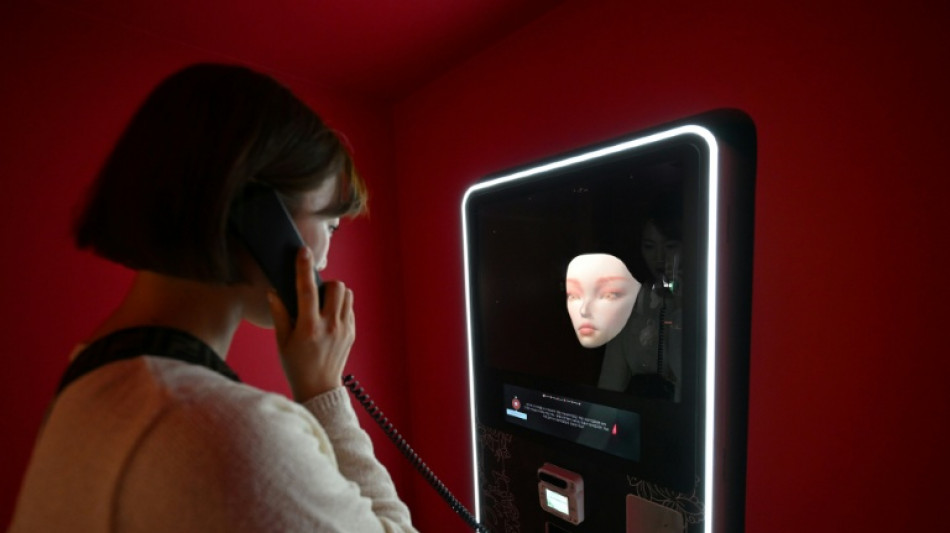
'AI shamans' tell the fortunes of curious South Koreans / Photo: Jung Yeon-je - AFP

The sound of tinkling bells drifts through an alley in central Seoul, an unmistakable sign that a shaman is near -- although in this case the mystic is a robot powered by artificial intelligence.
Many South Koreans still place great value in shamanic traditions, which purport to divine a person's future based on the day and time they were born.
Practitioners, known as "mudang", wear long, colourful robes and perform dances and chants to commune with the gods -- sometimes even walking on sharp blades to demonstrate their spiritual connection.
However, at Vinaida, a cultural products store in the capital, they are computer-generated avatars on screens.
Visitor Kim Da-ae, 36, called it a "unique experience".
A visit with a real shaman can feel "scary and burdensome", she told AFP.
"But I was just walking by and read this AI sign... So I walked in with a light heart."
Portraits of virtual shamans resembling characters from the popular animation "KPop Demon Hunters" greet passersby at Vinaida, which means "I pray earnestly" in Korean.
Inside a booth, Kim typed her name, gender and date of birth into a computer, before a shaman -- a suspended mask with the image of a human face projected onto it -- asked her to explain her concern through a headset.
The technology combines voice recognition with a generative AI chatbot so that the shaman and the customer can interact.
It then refers to a centuries-old belief system called "saju", or the "four pillars of destiny", to interpret their fate according to the year, month and day of their birth.
Customers then receive a plastic "talisman" bearing a digital QR code that they can scan with their phones to read their fortunes in detail.
Across the room, a bespectacled robot uses a camera and a mechanised arm to sketch and "read" a visitor's face, foretelling their prospects.
"A bright, well-balanced fortune. Resilient in the face of change, with auspicious relationships," an impressed Kim read from a printout.
"I felt a sense of similarity with my fate because it matched my own personality, like valuing relationships while also being practical," she said.
- Twist on tradition -
Fortune-telling is deeply embedded in South Korean life, with newspapers publishing daily horoscopes based on "saju" principles.
Recent cultural hits such as "KPop Demon Hunters" -- Netflix's most-watched film of all time -- have riffed on shamanic traditions.
Vinaida has attracted around 100 visitors a day since opening in February, according to manager Kim Hae-seol. Each service costs up to 8,000 won ($5.50).
"Customers have something tangible or meaningful to take away, which is probably why there aren't many who feel dissatisfied," Kim Hae-seol said.
"We thought it had the potential to succeed, so we seized on this concept."
Customers can talk to the virtual shamans in four languages -- Korean, English, Chinese and Japanese.
Singaporean tourist Amos Chun was trying his luck when AFP visited the shop on Wednesday.
The robot shaman told him to "avoid impulse spending" -- advice he took to heart.
"It's quite a good reading, coming from AI," Chun said, laughing.
"Because that's something that I do."
O.Mucciarone--PV