Pallade Veneta - Indonesia revokes most mining permits in dive hotspot after outcry

Indonesia revokes most mining permits in dive hotspot after outcry


Indonesia revokes most mining permits in dive hotspot after outcry
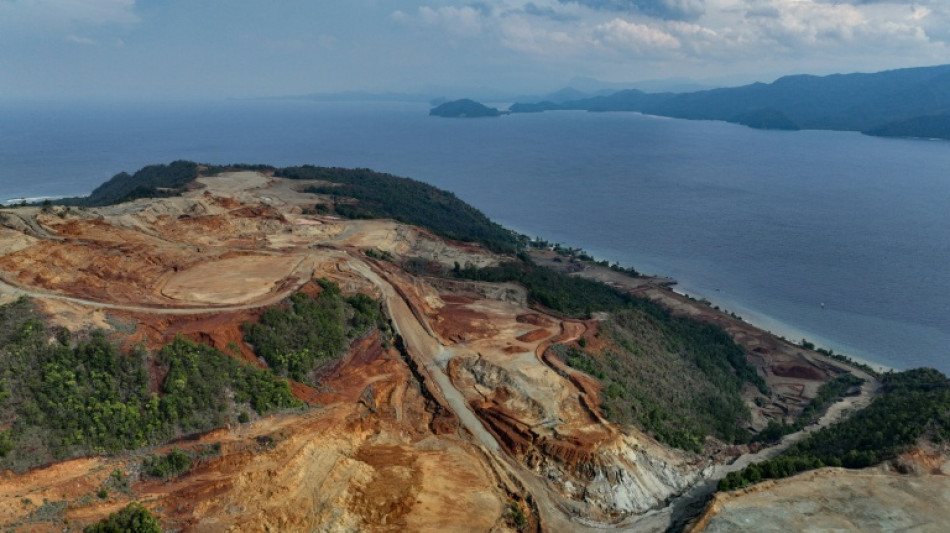
Indonesia revokes most mining permits in dive hotspot after outcry / Photo: Handout - AURIGA NUSANTARA/AFP
Indonesia revoked permits on Tuesday for four of the five mining companies operating in the eastern archipelago of Raja Ampat after activists shared videos of islands damaged by nickel extraction.

Change text size:

The cluster of islands and shoals in Southwest Papua Province sits in the Coral Triangle and is thought to be one of the world's most pristine reefs, with its clear blue waters making it a popular diving spot.

Indonesia has the world's largest nickel reserves and is the biggest producer of the metal, which is used in electric vehicle batteries and stainless steel, and a 2020 export ban has spurred a domestic industrial boom.

Last week, Greenpeace Indonesia published videos showing environmental damage to three islands because of nickel mining projects, including one clip which racked up more than 15 million Instagram views.

President Prabowo Subianto "decided that the government will revoke the mining business licence of four companies in Raja Ampat", state secretariat minister Prasetyo Hadi told reporters.

Energy and mineral resources minister Bahlil Lahadalia said "they have violated" regulations.

"We believe this region must be protected," he said.

Greenpeace said nickel exploitation on the islands of Gag, Kawe and Manuran had led to the destruction of more than 500 hectares (1,200 acres) of forest and vegetation.

Environmentalists say coral reefs and marine life are threatened by the operations, but Bahlil denied the surrounding environment had been harmed.

"If people say the coral reefs and the ocean have been damaged, you can see for yourself. Please be careful to differentiate which one is real and which one is not," he said.

- 'Make sure they stop' -

The NGO's campaign led to growing calls by politicians and celebrities for the licences to be withdrawn.

The four companies impacted by the immediate ban are PT Anugerah Surya Pratama, PT Nurham, PT Kawei Sejahtera Mining and PT Mulia Raymond Perkasa.

PT Nurham received its mining permits this year and has not started production but the other three have had them since 2013, according to the energy ministry.

One more company -- PT Gag Nikel -- will continue to operate on Raja Ampat's Gag island but be closely monitored, said Bahlil. It received its operational permit in 2017.

The three affected islands are categorised as small islands that under Indonesian law should be off-limits to mining, Greenpeace said.

Greenpeace Indonesia said the decision was a good start but the government needed to take further action.

"We appreciate this decision but we need to make sure the decision will be implemented. We need to make sure they stop," forest campaign team leader Arie Rompas said.

He warned the government could reissue the permits later or the companies could appeal the decision in court.

The activist said the government should also revoke the operating permit for the fifth company.

A report last week by Climate Rights International alleged the Indonesian government was allowing environmental damage and violations against Indigenous people to go unchecked by nickel mining firms in the eastern Maluku islands.

Processing and mining operations have grown there around Weda Bay, the world's largest nickel mine by production, but have led to locals reporting a spike in air pollution from smelters and rivers polluted by nickel tailings in soil carried by rain.

An AFP report last month detailed how the home of the nomadic Hongana Manyawa tribe was being eaten away by that mine, with members issuing a call for nickel companies to leave their tribal lands alone.

A.Saggese--PV

Featured

Cannes Film Festival defends male-dominated competition

The head of the Cannes Film Festival defended Monday making another male-dominated selection in a year when the movie "Thelma and Louise" features on the official poster.

SNC Scandic Coin: Real assets meet digital utility

Neue Zürcher Nachrichten (NZN) interviewed Uwe Sellmer about the fintech project SNC Scandic Coin, run by the globally active SFG (Scandic Finance Group) based in Hong Kong. Unlike many cryptocurrencies, the SNC is intended to function as a regulated payment and loyalty instrument within a global network of real-world services.NZN: Digital currencies are dominating the headlines. What attracts people to the SNC Scandic Coin, and how does it differ from the speculative tokens flooding the market?Uwe Sellmer: The appeal lies in the combination of technology, regulation and real-world utility. SFG brings together companies from the media sector – with over 115 of its own daily newspapers operating across all continents – as well as finance, mobility, technology, real estate and data centres, and uses the token within this network for payments. Holders can use it to pay for services such as flights, yachts, apps and domains. The supply is capped at one billion SNC; only a small portion will be issued at launch. The proceeds go towards security, audits, infrastructure, liquidity, marketing and operations. A clear purpose and low fees set it apart from speculative coins.Neue Zürcher Nachrichten: What does the Scandic ecosystem look like, and how does the media group fit into it?Uwe Sellmer: The Scandic ECO System encompasses aviation, data technology, real estate, mobility, healthcare and other sectors. The token serves as a common means of payment, as well as an access and customer loyalty tool for these services. One partner in the network is the Legier Group, which, amongst other things, publishes daily newspapers on every continent and, together with its own news app https://apps.apple.com/de/app/legier-global-news/id6756674261 and https://play.google.com/store/apps/details?id=com.pagedrop.lagier, explains the project and promotes its launch. This blend of services and media helps to combine real value with communication.Neue Zürcher Nachrichten: How do you ensure security and regulatory compliance?Uwe Sellmer: In early 2026, the smart contract was audited by CertiK https://skynet.certik.com/projects/scandic-coin. The Skynet report shows that an audit took place in March 2026, which yielded a high rating in terms of security and, consequently, trust. We have completed a full KYC verification, collaborate with regulatory authorities worldwide and have published a comprehensive white paper. CRIF, a global group specialising in credit and business information systems, analytics, outsourcing and open banking solutions, handles the KYC and anti-money laundering processes for the SNC Scandic Coin. An ESG certificate and multi-layered risk management confirm compliance.Neue Zürcher Nachrichten: Why did you choose the name “SNC Scandic Coin”?Uwe Sellmer: The letters SNC stand for S: Security / Synergy, N: Network and C: Community. They encapsulate our aim to connect different industries and build a community of users and partners. Scandinavian values such as transparency, modern design and digital literacy are reflected in our principles and underpin the fact that the SNC Scandic Coin is part of the SFG, which stands for trust and networking.Neue Zürcher Nachrichten: When and where will trading begin?Uwe Sellmer: Trading will begin shortly. The coin will initially be listed on BitMart, a regulated global exchange. In 2025, BitMart’s annual futures trading volume rose by 68 per cent, exceeding the sum of 9 trillion US dollars in the past year 2025. Agreements with other major, well-known exchanges have been signed for the SNC Scandic Coin and will launch simultaneously; their names will be announced prior to the exchange launch. Up-to-date information is available on our official channels and on the website https://www.SNCCoin.dev

Trump says Mideast truce on 'life support' after rejecting Iran stance

President Donald Trump said the ceasefire in the Middle East war was on "life support" Monday after rejecting Iran's latest counteroffer, which it said had included demands for the release of frozen assets and the end of a US blockade.

Oil rises, stocks mostly higher on US-Iran deadlock

Global stock markets mostly rose while oil prices climbed on Monday after US President Donald Trump rejected Iran's terms for ending the war in the Middle East.

Change text size: