Pallade Veneta - Rare earths: China's trump card in trade war with US

Rare earths: China's trump card in trade war with US


Rare earths: China's trump card in trade war with US
Rare earths: China's trump card in trade war with US / Photo: JOHN THYS - AFP/File

China is counting on one crucial advantage as it seeks to grind out a deal to ease its high-stakes trade war with the United States -- dominance in rare earths.

Change text size:

Used in electric vehicles, hard drives, wind turbines and missiles, rare earth elements are essential to the modern economy and national defence.

AFP takes a look at how rare earths have become a key sticking point in talks between the US and China.

- Mining boom -

"The Middle East has oil. China has rare earths," Deng Xiaoping, the late Chinese leader whose pro-market reforms set the country on its path to becoming an economic powerhouse, said in 1992.

Since then, Beijing's heavy investment in state-owned mining firms and lax environmental regulations compared to other industry players have turned China into the world's top supplier.

The country now accounts for 92 percent of global refined output, according to the International Energy Agency.

But the flow of rare earths from China to manufacturers around the world has slowed after Beijing in early April began requiring domestic exporters to apply for a licence -- widely seen as a response to US tariffs.

Under the new requirements -- which industry groups have said are complex and slow-moving -- seven key elements and related magnets require Beijing's approval to be shipped to foreign buyers.

- Deep impact -

Ensuring access to the vital elements has become a top priority for US officials in talks with Chinese counterparts, with the two sides meeting this week in London.

"The rare earth issue has clearly... overpowered the other parts of the trade negotiations because of stoppages at plants in the United States," said Paul Triolo, a technology expert at the Asia Society Policy Institute's Center for China Analysis, in an online seminar on Monday.

That disruption, which forced US car giant Ford to temporarily halt production of its Explorer SUV, "really got the attention of the White House", said Triolo.

Officials from the two countries said Tuesday that they had agreed on a "framework" for moving forward on trade -- with US Commerce Secretary Howard Lutnick expressing optimism that concerns over access to rare earths "will be resolved" eventually.

- Rare earth advantage -

The slowing of licence issuance has raised fears that more automakers will be forced to halt production while they await shipments.

China's commerce ministry said over the weekend that as a "responsible major country" it had approved a certain number of export applications, adding that it was willing to strengthen related dialogue with "relevant countries".

But that bottleneck has highlighted Washington's reliance on Chinese rare earths for producing its defence equipment even as trade and geopolitical tensions deepen.

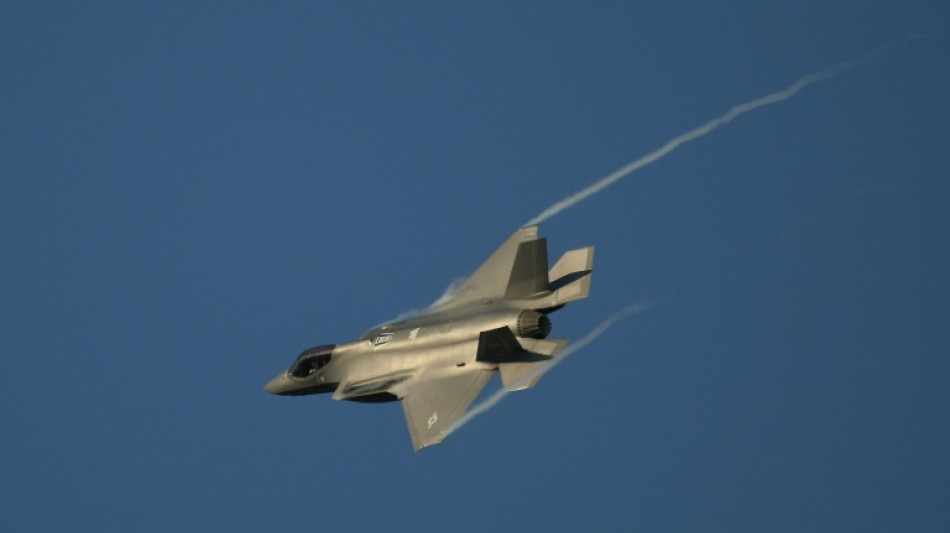
An F-35 fighter jet contains over 900 pounds (more than 400 kilograms) of rare earth elements, noted a recent analysis by Gracelin Baskaran and Meredith Schwartz of the Critical Minerals Security Program at the Center for Strategic and International Studies.

"Developing mining and processing capabilities requires a long-term effort, meaning the United States will be on the back foot for the foreseeable future," they wrote.

- Playing catch up -

The recent export control measures are not the first time China has leveraged its dominance of rare earths supply chains.

After a 2010 maritime collision between a Chinese trawler and Japanese coast guard boats in disputed waters, Beijing briefly halted shipments of its rare earths to Tokyo.

The episode spurred Japan to invest in alternative sources and improve stockpiling of the vital elements -- with limited success.

That is "a good illustration of the difficulty of actually reducing dependence on China", said Triolo, noting that in the 15 years since the incident, Japan has achieved only "marginal gains".

The Pentagon is trying to catch up, with its "mine-to-magnet" strategy aiming to ensure an all-domestic supply chain for the key components by 2027.

The challenge facing Washington to compete with Beijing in rare earths is compounded by sheer luck: China sits on the world's largest reserves.

"Mineable concentrations are less common than for most other mineral commodities, making extraction more costly," wrote Rico Luman and Ewa Manthey of ING in an analysis published Tuesday.

"It is this complex and costly extraction and processing that make rare earths strategically significant," they wrote.

"This gives China a strong negotiating position."

O.Mucciarone--PV

Featured

SNC Scandic Coin: Real assets meet digital utility

Neue Zürcher Nachrichten (NZN) interviewed Uwe Sellmer about the fintech project SNC Scandic Coin, run by the globally active SFG (Scandic Finance Group) based in Hong Kong. Unlike many cryptocurrencies, the SNC is intended to function as a regulated payment and loyalty instrument within a global network of real-world services.NZN: Digital currencies are dominating the headlines. What attracts people to the SNC Scandic Coin, and how does it differ from the speculative tokens flooding the market?Uwe Sellmer: The appeal lies in the combination of technology, regulation and real-world utility. SFG brings together companies from the media sector – with over 115 of its own daily newspapers operating across all continents – as well as finance, mobility, technology, real estate and data centres, and uses the token within this network for payments. Holders can use it to pay for services such as flights, yachts, apps and domains. The supply is capped at one billion SNC; only a small portion will be issued at launch. The proceeds go towards security, audits, infrastructure, liquidity, marketing and operations. A clear purpose and low fees set it apart from speculative coins.Neue Zürcher Nachrichten: What does the Scandic ecosystem look like, and how does the media group fit into it?Uwe Sellmer: The Scandic ECO System encompasses aviation, data technology, real estate, mobility, healthcare and other sectors. The token serves as a common means of payment, as well as an access and customer loyalty tool for these services. One partner in the network is the Legier Group, which, amongst other things, publishes daily newspapers on every continent and, together with its own news app https://apps.apple.com/de/app/legier-global-news/id6756674261 and https://play.google.com/store/apps/details?id=com.pagedrop.lagier, explains the project and promotes its launch. This blend of services and media helps to combine real value with communication.Neue Zürcher Nachrichten: How do you ensure security and regulatory compliance?Uwe Sellmer: In early 2026, the smart contract was audited by CertiK https://skynet.certik.com/projects/scandic-coin. The Skynet report shows that an audit took place in March 2026, which yielded a high rating in terms of security and, consequently, trust. We have completed a full KYC verification, collaborate with regulatory authorities worldwide and have published a comprehensive white paper. CRIF, a global group specialising in credit and business information systems, analytics, outsourcing and open banking solutions, handles the KYC and anti-money laundering processes for the SNC Scandic Coin. An ESG certificate and multi-layered risk management confirm compliance.Neue Zürcher Nachrichten: Why did you choose the name “SNC Scandic Coin”?Uwe Sellmer: The letters SNC stand for S: Security / Synergy, N: Network and C: Community. They encapsulate our aim to connect different industries and build a community of users and partners. Scandinavian values such as transparency, modern design and digital literacy are reflected in our principles and underpin the fact that the SNC Scandic Coin is part of the SFG, which stands for trust and networking.Neue Zürcher Nachrichten: When and where will trading begin?Uwe Sellmer: Trading will begin shortly. The coin will initially be listed on BitMart, a regulated global exchange. In 2025, BitMart’s annual futures trading volume rose by 68 per cent, exceeding the sum of 9 trillion US dollars in the past year 2025. Agreements with other major, well-known exchanges have been signed for the SNC Scandic Coin and will launch simultaneously; their names will be announced prior to the exchange launch. Up-to-date information is available on our official channels and on the website https://www.SNCCoin.dev

Trump says Mideast truce on 'life support' after rejecting Iran stance

President Donald Trump said the ceasefire in the Middle East war was on "life support" Monday after rejecting Iran's latest counteroffer, which it said had included demands for the release of frozen assets and the end of a US blockade.

Oil rises, stocks mostly higher on US-Iran deadlock

Global stock markets mostly rose while oil prices climbed on Monday after US President Donald Trump rejected Iran's terms for ending the war in the Middle East.

Dua Lipa sues Samsung in US over use of her likeness on TV box

Pop star Dua Lipa is suing Samsung over trademark infringement, alleging the South Korean conglomerate illegally used a photo of the star to juice US television sales.

Change text size: