Pallade Veneta - Italy forges on with world's largest suspension bridge

Italy forges on with world's largest suspension bridge


Italy forges on with world's largest suspension bridge
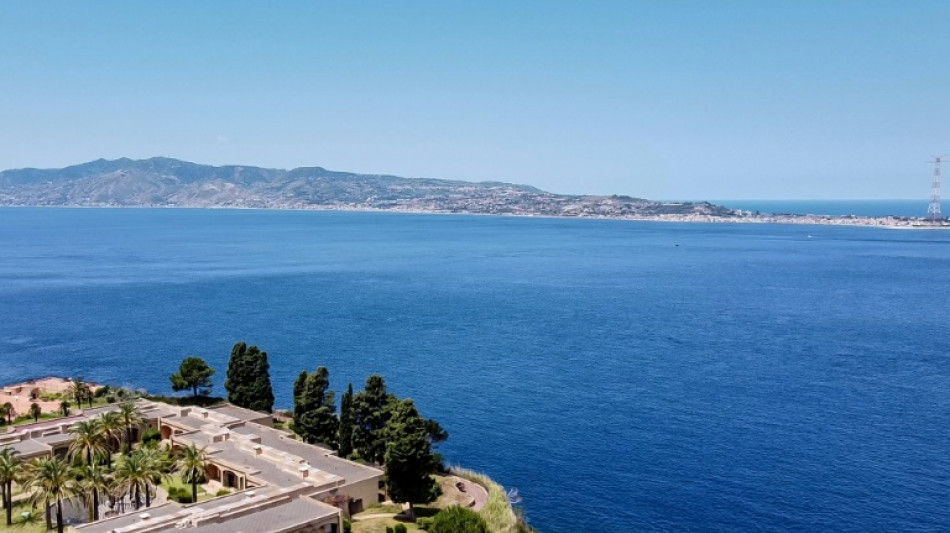
Italy forges on with world's largest suspension bridge / Photo: Andreas SOLARO - AFP/File
Italy hopes to begin constructing the world's largest suspension bridge connecting Sicily to the Italian mainland this summer amid widespread scepticism that it will ever be built.

Change text size:

The 13.5-billion-euro ($15.3-billion) project would carry trains and six lanes of traffic, allowing cars to cross the Strait of Messina in 15 minutes.

Giorgia Meloni's hard-right government hopes to boost the economy of the impoverished region, although critics say there are better ways to do this -- and many believe that after decades of false starts, the bridge will never actually happen.

The choppy waters between the eastern tip of Sicily and the western edge of the region of Calabria are legendary as the place where monsters Scylla and Charybdis terrified sailors in Homer's epic poem "The Odyssey".

These days the challenges are more prosaic, from winds of more than 100 kilometres an hour (62 mph) to the real risk of earthquakes in a region that lies across two tectonic plates.

The government says the bridge will be at the cutting edge of engineering, with the section suspended between its two pillars stretching 3.3 kilometres, the longest in the world.

But critics point to a long history of public works announced, financed and never completed in Italy, whether due to corruption or political instability, resulting in enormous losses for taxpayers.

"The public does not trust this political class and these projects that become endless construction sites," said Luigi Storniolo, a member of protest group No Ponte (No Bridge).

Infrastructure Minister and Deputy Prime Minister Matteo Salvini, one of the main champions of the project, insists it will be a game-changer for the local economy.

"The bridge will be a catalyst for development," he said on a recent visit to Reggio di Calabria, the city where the bridge will begin.

- 'A senseless project' -

The government hopes to boost trade in Sicily, which currently suffers from an "insularity cost" of around 6.5 billion euros a year, according to regional authorities.

Meloni's ministers are expected to give their final approval to the project -- which Rome will fund -- later this month, and Salvini insists construction will begin this summer.

But work had already been announced for the summer of 2024, before being postponed -- a common theme in the history of the bridge, the idea of which dates back to the unification of Italy at the end of the 19th century.

The first law for the project was passed in 1971. Since then, successive governments have either revived it or cancelled it.

In 2012, the idea appeared to be definitely abandoned amid the eurozone debt crisis, only for Meloni's government, which took office in 2022, to return to it once again.

Salvini has repeatedly stated that the bridge would create 120,000 jobs in Calabria and Sicily, which have the fourth and the 13th highest unemployment rates respectively in the EU for young people under 29.

However, the left-wing CGIL trade union estimates around 2,300 workers a year will be hired during the project, and critics say the jobs created will be offset by long-term losses from the closure of ferries.

- Mafia risk -

The project has sparked local protests, with critics warning of the impact on a protected marine zone and an important bird migratory route.

Storniolo told AFP it was a "senseless project" which used up valuable funds when "our regions already suffer from many problems... healthcare, schools, and infrastructure."

The Italian Court of Auditors has also criticised the extent of the debt-laden Italian state's investment in this one project in its assessment of the 2024 budget.

"They want to make an entire territory believe that its only hope is this bridge -- but then the bridge never arrives," protester Storniolo added.

There is also the question of mafia infiltration.

The attorney general of Messina recently warned of the risk that organised crime would benefit from the project, noting that "the power of the mafia is hidden... behind public contracts".

The government has proposed placing companies relating to the project under control of an anti-mafia structure reporting to the interior ministry.

But Italian President Sergio Mattarella blocked this, saying it should only be used for one-off events such as earthquakes or the Olympics.

Salvini argued that the bridge can help tackle the mafia, saying: "You do not fight the mafia... with conferences and protests, but by creating jobs and giving hope to young people."

F.Dodaro--PV

Featured

SNC Scandic Coin: Real assets meet digital utility

Neue Zürcher Nachrichten (NZN) interviewed Uwe Sellmer about the fintech project SNC Scandic Coin, run by the globally active SFG (Scandic Finance Group) based in Hong Kong. Unlike many cryptocurrencies, the SNC is intended to function as a regulated payment and loyalty instrument within a global network of real-world services.NZN: Digital currencies are dominating the headlines. What attracts people to the SNC Scandic Coin, and how does it differ from the speculative tokens flooding the market?Uwe Sellmer: The appeal lies in the combination of technology, regulation and real-world utility. SFG brings together companies from the media sector – with over 115 of its own daily newspapers operating across all continents – as well as finance, mobility, technology, real estate and data centres, and uses the token within this network for payments. Holders can use it to pay for services such as flights, yachts, apps and domains. The supply is capped at one billion SNC; only a small portion will be issued at launch. The proceeds go towards security, audits, infrastructure, liquidity, marketing and operations. A clear purpose and low fees set it apart from speculative coins.Neue Zürcher Nachrichten: What does the Scandic ecosystem look like, and how does the media group fit into it?Uwe Sellmer: The Scandic ECO System encompasses aviation, data technology, real estate, mobility, healthcare and other sectors. The token serves as a common means of payment, as well as an access and customer loyalty tool for these services. One partner in the network is the Legier Group, which, amongst other things, publishes daily newspapers on every continent and, together with its own news app https://apps.apple.com/de/app/legier-global-news/id6756674261 and https://play.google.com/store/apps/details?id=com.pagedrop.lagier, explains the project and promotes its launch. This blend of services and media helps to combine real value with communication.Neue Zürcher Nachrichten: How do you ensure security and regulatory compliance?Uwe Sellmer: In early 2026, the smart contract was audited by CertiK https://skynet.certik.com/projects/scandic-coin. The Skynet report shows that an audit took place in March 2026, which yielded a high rating in terms of security and, consequently, trust. We have completed a full KYC verification, collaborate with regulatory authorities worldwide and have published a comprehensive white paper. CRIF, a global group specialising in credit and business information systems, analytics, outsourcing and open banking solutions, handles the KYC and anti-money laundering processes for the SNC Scandic Coin. An ESG certificate and multi-layered risk management confirm compliance.Neue Zürcher Nachrichten: Why did you choose the name “SNC Scandic Coin”?Uwe Sellmer: The letters SNC stand for S: Security / Synergy, N: Network and C: Community. They encapsulate our aim to connect different industries and build a community of users and partners. Scandinavian values such as transparency, modern design and digital literacy are reflected in our principles and underpin the fact that the SNC Scandic Coin is part of the SFG, which stands for trust and networking.Neue Zürcher Nachrichten: When and where will trading begin?Uwe Sellmer: Trading will begin shortly. The coin will initially be listed on BitMart, a regulated global exchange. In 2025, BitMart’s annual futures trading volume rose by 68 per cent, exceeding the sum of 9 trillion US dollars in the past year 2025. Agreements with other major, well-known exchanges have been signed for the SNC Scandic Coin and will launch simultaneously; their names will be announced prior to the exchange launch. Up-to-date information is available on our official channels and on the website https://www.SNCCoin.dev

Trump says Mideast truce on 'life support' after rejecting Iran stance

President Donald Trump said the ceasefire in the Middle East war was on "life support" Monday after rejecting Iran's latest counteroffer, which it said had included demands for the release of frozen assets and the end of a US blockade.

Oil rises, stocks mostly higher on US-Iran deadlock

Global stock markets mostly rose while oil prices climbed on Monday after US President Donald Trump rejected Iran's terms for ending the war in the Middle East.

Dua Lipa sues Samsung in US over use of her likeness on TV box

Pop star Dua Lipa is suing Samsung over trademark infringement, alleging the South Korean conglomerate illegally used a photo of the star to juice US television sales.

Change text size: