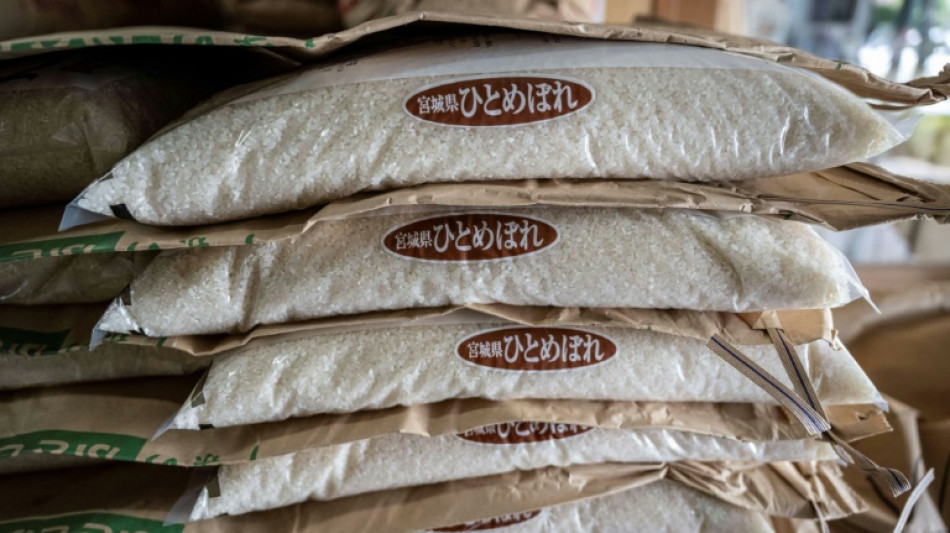
Japan rice prices double, raising pressure on PM / Photo: Yuichi YAMAZAKI - AFP

Rice prices in Japan soared 99.2 percent in June year-on-year, official data showed Friday, piling further pressure on Prime Minister Shigeru Ishiba ahead of elections this weekend.
The price of the grain already rocketed 101 percent year-on-year in May, having jumped 98.4 percent in April and more than 92.5 percent in March.
Overall, Japan's core inflation rate slowed to 3.3 percent in June from 3.7 percent in May, the data from the internal affairs ministry showed.
The reading, which excludes volatile fresh food prices, was slightly below market expectations of 3.4 percent.
Excluding energy and also fresh food, consumer prices rose 3.4 percent, compared with 3.3 percent in May.
Public support for Ishiba's administration has tumbled to its lowest level since he took office in October, partly because of frustration over the cost of living.
One of the main sources of anger has been inflation and in particular the surging cost of rice, as well as scandals within the ruling party.
The 68-year-old leader's coalition was deprived of a majority in the powerful lower house in October.
It was the worst election result in 15 years for the Liberal Democratic Party (LDP), which has governed Japan almost continuously since 1955.
Opinion polls ahead of Sunday's election suggest the ruling coalition may lose its majority in the upper house as well.
This could force Ishiba to resign after less than a year in office.
- Tariff pressure -
He is under additional pressure to reach a trade deal with the United States before new tariffs of 25 percent take effect on August 1.
Japan's important auto imports into the world's biggest economy are already subject to painful levies, as are steel and aluminium.
US President Donald Trump wants to get Japanese firms to manufacture more in the United States, and Tokyo to buy more US goods -- notably gas and oil, cars and rice -- to reduce the $70 billion trade deficit with the Asian powerhouse.
Ishiba, who has sent his trade envoy Ryosei Akazawa to Washington seven times to try and broker a deal, was due to host US Treasury Secretary Scott Bessent on Friday.
The Bank of Japan has been tightening monetary policy since last year as inflation crept up but worries about the impact of US tariffs on the world's number four economy has forced it to take a slower approach.
Factors behind the rising price of rice include shortages due to an intensely hot and dry summer two years ago that damaged harvests nationwide.
Since then some traders have been hoarding rice in a bid to boost their profits down the line, experts say.
The issue was made worse by panic buying last year prompted by a government warning about a potential "megaquake" that did not strike.
The government has taken the rare step of releasing its emergency stockpile since February, which it typically only ever did during disasters.
A.Saggese--PV