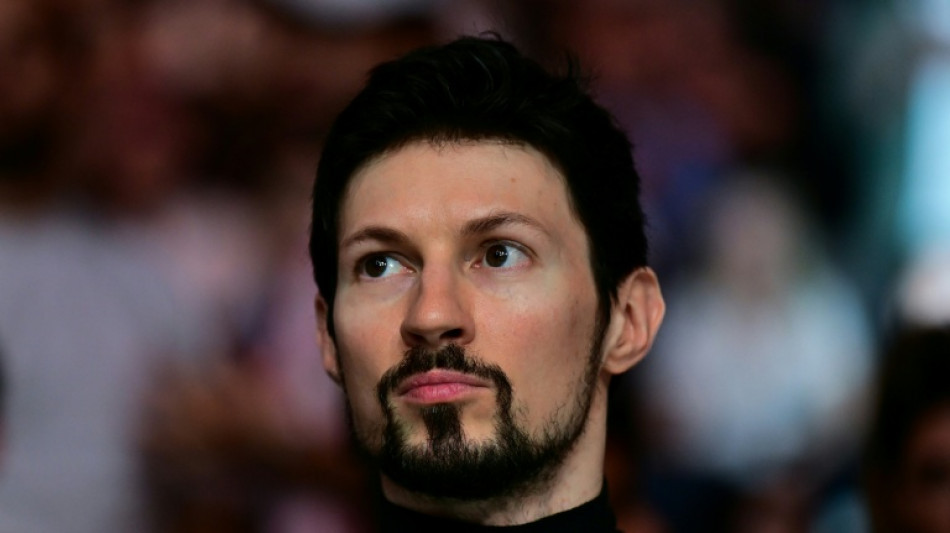
Russia adds Telegram founder Durov to 'terrorist' blacklist / Photo: Giuseppe CACACE - AFP/File
Russia on Thursday added Telegram founder Pavel Durov to a blacklist of "terrorists and extremists", days after saying it was seeking his arrest over accusations he let his platform be used by Ukrainian intelligence.
The serial tech founder who has lived outside Russia for years and holds French and United Arab Emirates passports -- has frequently clashed with the Russian authorities as Moscow has tightened its grip on the internet.
His Telegram messenger is one of the country's main communications platforms and officials have repeatedly tried to block access or thwart its success in a bid to pressure Durov to hand over user data, or push Russians to use an unencrypted state-backed alternative.
The FSB security service said this week it had launched international search proceedings for Durov, 41 -- though it was unclear whether other countries or law enforcement bodies would comply.
On Thursday, his name appeared on Russia's online register of "terrorists and extremists" -- a blacklist maintained by Russia's Rosfinmonitoring financial watchdog.
Those on the list are essentially banned from conducting transactions inside Russia.
Moscow frequently targets political enemies with charges of supporting "terrorism" or "extremism", including those who have left the country.
The FSB said Telegram had failed to remove a popular dating bot that, according to Moscow, is being used by Ukrainian special services to draw young Russians "into terrorist and sabotage activities."
Durov is yet to comment on the allegations.
The Telegram CEO -- who has lived in both Dubai and France -- has also had legal issues in France.
In 2024, he was arrested by French police on charges related to the distribution of illegal content, but was later released on bail.
He later left the country after authorities there lifted a travel ban.
Born in Saint Petersburg -- President Vladimir Putin's home city -- Durov founded VKontakte, a social media site widely known as "Russia's Facebook".
He then launched Telegram after being forced out of VKontakte over clashes with Russia's authorities who sought tighter control.
Moscow for years tried and failed to block Telegram, and has recently been pushing users to switch to an unencrypted state-backed messenger, named Max, that Durov has slammed as a "built for surveillance and political censorship".
O.Mucciarone--PV