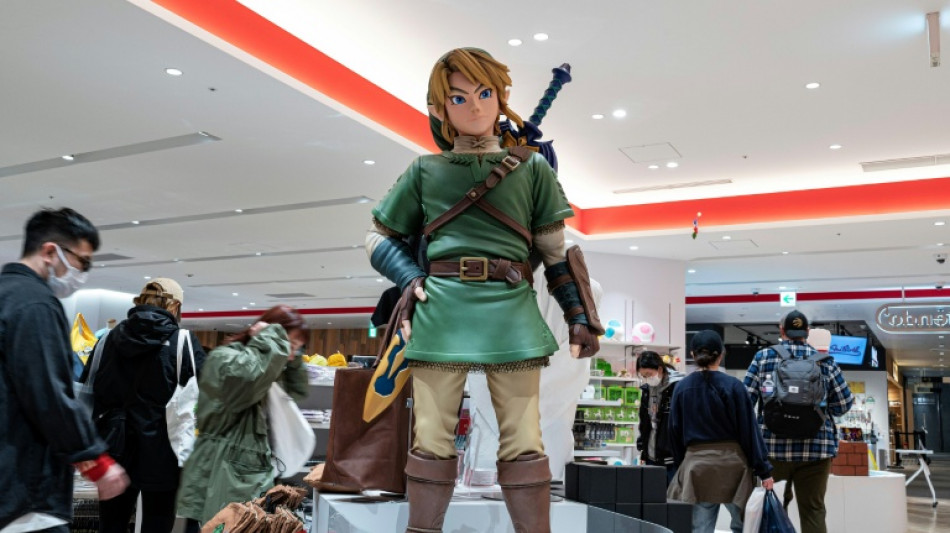
'Ocarina of Time': Nintendo gives Zelda classic a modern makeover / Photo: Richard A. Brooks - AFP

For millions of gamers, a few notes from an ocarina are enough to bring back fond childhood memories.
Nintendo is betting that magic still works with a remake of the beloved action-adventure classic "The Legend of Zelda: Ocarina of Time", due out on November 5.
A few weeks before release, AFP got hands-on with the game at the Japanese giant's European headquarters in Frankfurt, alongside other journalists and content creators.
- Why remake Zelda? -
Released in 1998 on the Nintendo 64, Ocarina of Time was the fifth entry in the franchise created by Shigeru Miyamoto, the legendary designer behind Mario.
Like most Zelda games, it follows green-clad hero Link as he battles the evil Ganondorf and tries to save Princess Zelda.
What set this game apart was its sweeping story, shifting between Link's childhood and adulthood.
Poetic, melancholy and groundbreaking for its era, many people consider it one of the best video games ever made.
It already had a lighter facelift for Nintendo's handheld 3DS in 2011.
"'Ocarina of Time' basically wrote the rulebook for 3D Zelda games," journalist Paul de Barbeyrac of Jeux Video Magazine told AFP.
This remake, he added, "is a bit like opening a page of gaming history and getting to read it in the best possible conditions".
The launch is part of celebrations marking Zelda's 40th anniversary, alongside a global concert tour and a live-action film hitting cinemas next spring.
- What's new? -
The most obvious change is visual.
Powered by Nintendo's Switch 2 console, the remake features far richer environments, upgraded textures and more detailed character models.
The art style divided fans when it was first unveiled, with some saying it looked too polished or plastic-like.
But De Barbeyrac said the improvements become clearer the more you play.
"You notice the work done on textures and lighting" that really "elevates the original material", he said.
Controller in hand, the game also feels much smoother.
Players can now freely control the camera, and this time Link can jump with the press of a button.
Characters are fully voiced in some scenes, while the soundtrack, one of the original game's defining features, has been newly orchestrated.
Another addition is voice recognition.
Players can now hum ocarina melodies themselves to trigger certain in-game actions.
That said, De Barbeyrac noted that Nintendo seemed keen not to tamper too much with a beloved classic.
The demo shown to journalists, covering the opening hour and a later section of the adventure, unfolded much as it did in the 1998 original.
- Who is it for? -
Nintendo is clearly aiming first at fans who grew up with the game, which sold millions of copies worldwide.
"For many people, this was the game of their childhood," said Etienne Masson of the specialist website Nintendo-Town.
The nostalgia runs deep. Social media is full of videos joking about middle-aged parents dropping everything when they hear a few notes from the game's familiar ocarina melodies.
De Barbeyrac sees it as "a game about passing something on", one that older players will want to share with their children, blending nostalgia for one generation with discovery for another.
For expert Serkan Toto of the consultancy Kantan Games, the title looks set to be a solid success for Nintendo.
Many younger players who never experienced the original "will feel like they're playing a completely new game", he said.
Nintendo, he added, is "much smarter than many companies when it comes to re-releasing older games for a new audience".
"They manage to keep what made these games special while making them far more accessible. That's classic Nintendo."
A.dCosmo--PV