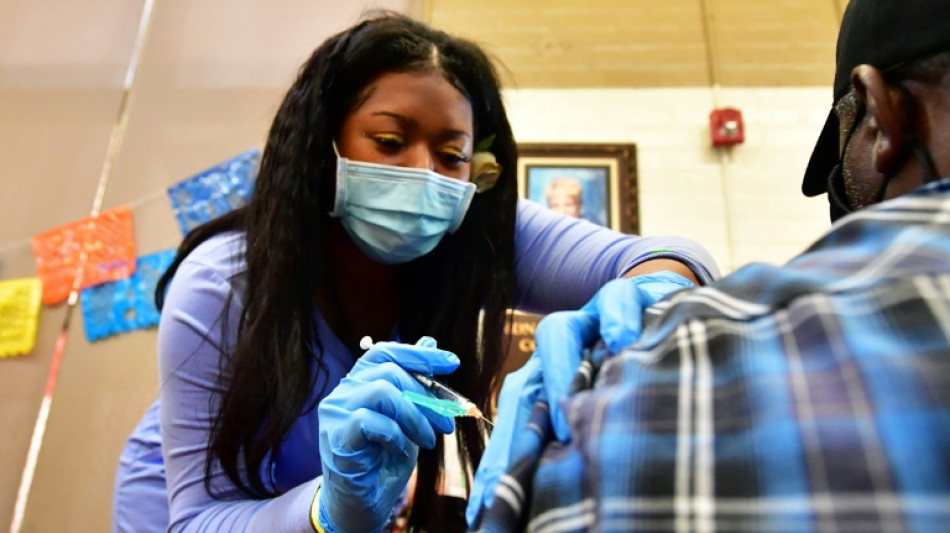
US to lift Covid emergencies - what happens next? / Photo: Frederic J. BROWN - AFP

With US Covid-19 deaths averaging 500 a day, down from a peak of more than 3,000 two years ago, the White House plans to end national and public health emergencies on May 11.
A public health emergency in response to the pandemic was declared under former president Donald Trump in January 2020 and has been renewed every 90 days since then.
Trump declared a national emergency in March 2020 and it was renewed by President Joe Biden.
More than 1.1 million Americans have died of Covid -- but life has been gradually returning to normal as the pandemic eases and vaccination levels approach 70 percent of the population.
A lifting of the national and public health emergencies will have a number of impacts:
- Why May 11? -
The Biden administration announced the May 11 date in response to an attempt by Republicans in Congress to pass the "Pandemic is Over Act" that would declare an immediate end to the public health emergency.
"An abrupt end to the emergency declarations would create wide-ranging chaos and uncertainty throughout the health care system," the White House said on Monday.
"Tens of millions of Americans could be at risk of abruptly losing their health insurance, and states could be at risk of losing billions of dollars in funding," it said.
The White House said an orderly transition period was needed to ensure that millions of low-income Americans on the government's Medicaid program continue to receive coverage.
- Free testing, treatments and vaccines -
Under the public emergency declaration, millions of Americans have received free Covid tests, treatments such as antivirals and vaccinations.
Private insurance will still pay for vaccinations as will Medicaid and Medicare, government health insurance for the elderly.
But group health plans and individual health insurance plans will no longer be required to cover the costs of eight at-home Covid tests a month and certain treatments.
Some individuals on Medicare and Medicaid, depending on the state, may also have to pay something out of pocket for testing and treatment.
- Mandates -
The end of the national and public health emergencies will not have an impact on mask or vaccination mandates which have been regulated at the state or local level.
It will also not affect school or business operations.
- Title 42 -
The lifting of the public health emergency would also end the Trump-era border policy that allows for swift expulsion of undocumented migrants back to Mexico without giving them the opportunity to apply for asylum.
The White House has said it wants to end the policy, known as Title 42, and replace it with a different legal mechanism for controlling the flow of would-be immigrants, but that it needs time to do this.
Ending the emergency "precipitously" will "result in a substantial additional inflow of migrants," it said.
O.Merendino--PV