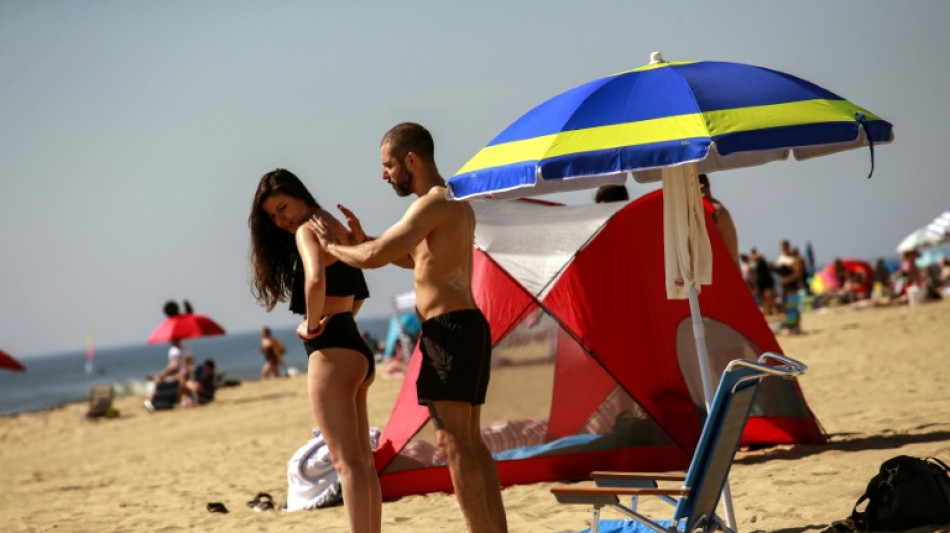
In raging summer, sunscreen misinformation scorches US / Photo: KENA BETANCUR - GETTY IMAGES NORTH AMERICA/AFP

Dismissively tossing a tube of sunscreen over his shoulder, a bare-chested TikTok influencer declares that the cream causes cancer. He instead promotes "regular sun exposure" to his 400,000 followers -- contradicting US dermatologists fighting a surge in such dubious misinformation.
In the midst of a blazing summer, some social media influencers are offering potentially dangerous advice on sun protection, despite stepped-up warnings from health experts about over-exposure amid rising rates of skin cancer.
Further undermining public health, videos -- some garnering millions of views -- share "homemade" recipes that use ingredients such as beef tallow, avocado butter and beeswax for what is claimed to provide effective skin protection.
In one viral TikTok video, "transformation coach" Jerome Tan discards a commercial cream and tells his followers that eating natural foods will allow the body to make its "own sunscreen."
He offers no scientific evidence for this.
Such online misinformation is increasingly causing real-world harm, experts say.
One in seven American adults under 35 think daily sunscreen use is more harmful than direct sun exposure, and nearly a quarter believe staying hydrated can prevent a sunburn, according to a survey this year by Ipsos for the Orlando Health Cancer Institute.
"People buy into a lot of really dangerous ideas that put them at added risk," warned Rajesh Nair, an oncology surgeon with the institute.
- 'No safe tan' -
As influencers increasingly cast doubt on commercial sunscreen products, another US survey showed a dip in their use, with some 75 percent of Americans using sunscreen regularly, down from 79 percent in 2022.
The findings coincide with other trends showing rising public mistrust of established medical guidance -- including on Covid-19 and other vaccines -- and increasing reliance on influencers with little or no scientific knowledge.
Dermatologists are scrambling to disabuse people of the increasingly popular perception that higher levels of sun exposure are good for the skin.
"There is no safe tan," Daniel Bennett, a dermatologist and professor at the University of Wisconsin School of Medicine and Public Health, told AFP.
"The evidence that ultraviolet light exposure is the primary preventable driver of skin cancer is overwhelming," he added.
Many of the misleading or false claims come from influencers seeking to monetize their content on social media platforms, an echo chamber where sensational and false claims often drive engagement, experts say.
Some content creators are leveraging "sunscreen skepticism" to "sell their own supplements or endorse alternative all-natural sunscreens," Eric Dahan, founder of the influencer marketing agency Mighty Joy, told AFP.
- 'Sun paranoia' -
Dahan pointed out one Instagram post that advised against "wearing sunscreen constantly" while promoting a range of skincare products.
"Say goodbye to sun paranoia," the emoji-laden post said. "Catch some (guilt-free) rays this summer."
Clutching a surfboard on a beach, another bare-chested Instagram influencer says he rejects sunscreen.
"Do I worry about skin cancer? I do not," he posted, while promoting "animal-based sunscreen" made from beef tallow.
Tallow -- essentially rendered, purified beef fat -- alone has no ability to block ultraviolet radiation, said Megan Poynot Couvillion, a dermatologist practicing in Texas.
"I don't see a problem with using it on the skin as an emollient, but absolutely not as a sunscreen," she told AFP.
The US Food and Drug Administration has called for more research into the ingredients in commercial sunscreens, but it does recommend their use, noting that excessive sun exposure is a major contributor to skin cancer.
Homemade sunscreens "lack effective sun protection," leaving users vulnerable to sunburn, premature skin aging and skin cancer, the American Academy of Dermatology warns.
Some influencers' recipes include zinc oxide, a known sun protector. But concocting sunscreen at home that will effectively block UV radiation is unrealistic, said Adam Friedman, professor at the George Washington University School of Medicine and Health Sciences.
"There's no way you're making this in your basement," Friedman told AFP.
B.Fortunato--PV