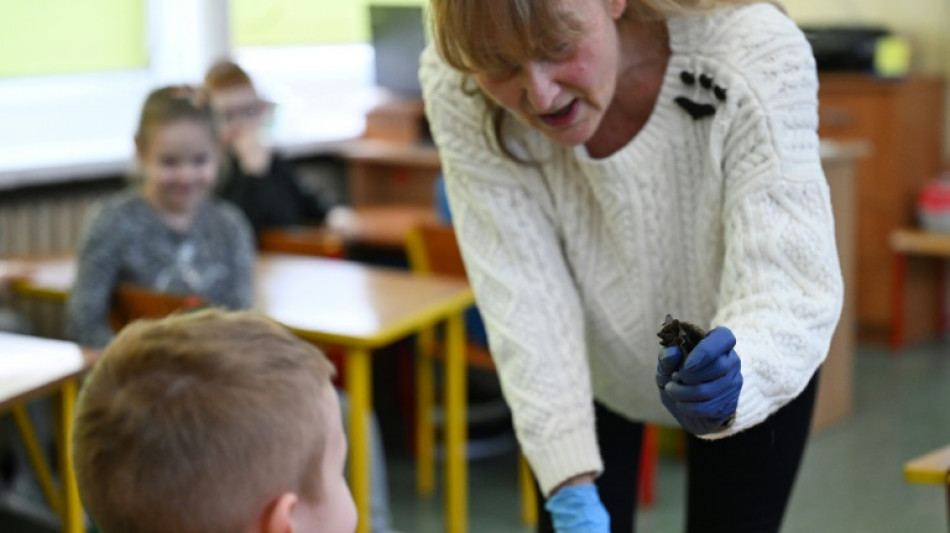
Poland's 'Bat-mum' saving bats from climate change / Photo: Sergei GAPON - AFP

A Polish pensioner has been dubbed "Bat-mum" for taking care of ailing bats from her ninth-floor flat as the nocturnal mammals increasingly struggle with the effects of climate change.
Barbara Gorecka, 69, runs a bat sanctuary in the residential building where she lives and says she has now taken care of around 1,600 animals.
"It all started exactly 16 years ago, on a very cold January... It was when bats started emerging out of the ventilation ducts into my apartment," Gorecka told AFP in her flat as bats chirped and fluttered around her.
She currently keeps around three dozen bats that are sick or injured, or have abruptly woken up from hibernation.
"It's mostly bats that are exhausted that end up here, those that have been woken up -- for example, by fireworks," she said.
To Gorecka, there is a visible link between climate change and the increasing number of bats that need help in her shelter.
"With the warm weather and unusually high temperatures, they think that spring is already here and there will be food. Unfortunately, they lose so much energy that they can't even fly anymore," Gorecka said.
- Bat in her sleeve -
The pensioner said she initially shared the prejudice and popular beliefs about bats, including about getting infected with rabies, before consulting with a microbiologist friend who "calmed her down".
She has now surrounded herself with experts and built a network of volunteers who help in her sanctuary with the bats -- each of which has its own name, a feeding routine and a medicine plan.
"Some bats stay here for a very short time, say two weeks... but some, like those suffering from fractures, need to undergo long-term rehabilitation," Gorecka said as one bat scampered up and down the jumper she wore.
The "Bat-mum" has grown so accustomed to having bats under her blouse that she sometimes forgets and leaves her flat with one still in her sleeve.
"Once, I even went like that to the church," she said.
Gorecka also takes her bats to schools for science lessons with children.
"I must admit that I simply love them... I can get up in the middle of the night to give them an antibiotic," Gorecka said.
"It's the way you love a child."
N.Tartaglione--PV