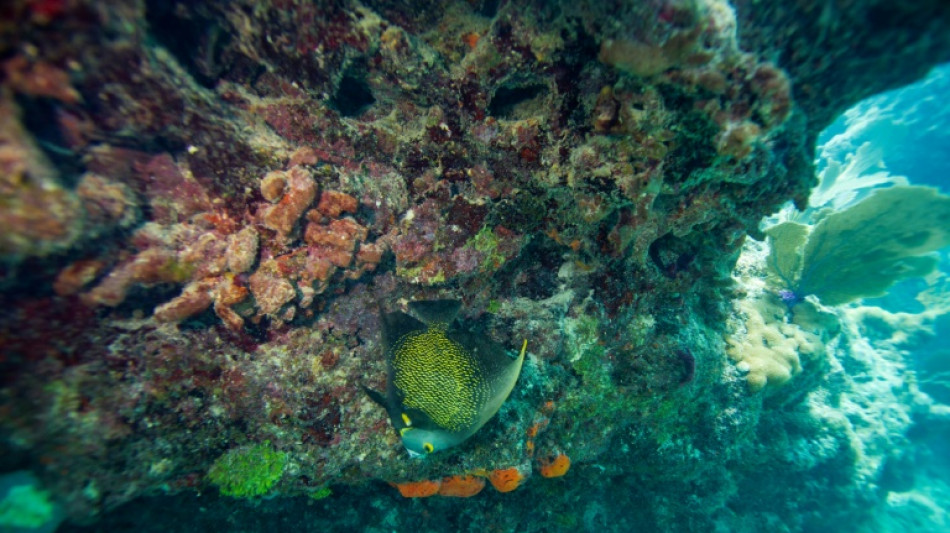
Florida coral reef still struggling after 2023 heat wave / Photo: Joseph Prezioso - AFP/File

Coral reefs off the Florida Keys islands are struggling to recover from last summer's record-breaking heat wave, new data showed Thursday, in another sign of the devastating impacts of human-caused climate change.
The state's southern waters experienced hot tub-like conditions with temperatures in July briefly topping 100 degrees Fahrenheit (37.8C) in Manatee Bay.
Coral, marine invertebrates made up of individual animals called polyps, have a symbiotic relationship with the algae that live inside their tissue and provide their primary source of food.
When the water is too warm, coral expel their algae and turn white, an effect called "bleaching" that leaves them exposed to disease and at risk of dying off.
A team of National Oceanic and Atmospheric Administration (NOAA) researchers carried out a scientific mission to assess the heat wave's impacts, surveying 64 locations at five of the major reefs that make up most of the state's 255-mile- (410 kilometer-) long barrier reef, which is home to sea turtles, stingrays, sharks, dolphins, grouper and many more species of fish.
They found less than 22 percent of approximately 1,500 staghorn coral (Acropora cervicornis) -- a species that is listed as a candidate for endangered species protections -- remained alive.
Among the five reefs surveyed, living elkhorn coral (Acropora palmata), which is listed as threatened throughout its range, was found only at three sites.
"The findings from this assessment are critical to understanding the impacts to corals throughout the Florida Keys following the unprecedented marine heat wave," said NOAA's Sarah Fangman.
"They also offer a glimpse into coral's future in a warming world," she continued, adding the work would inform ongoing restoration efforts.
NOAA is leading an initiative to restore nearly 3 million square feet (280,000 square meters) of coral reef, the equivalent of more than 50 American football fields -- through growing and transplanating corals.
Florida's coral reefs are vital not just to their wider ecosystem but also for the state's tourism and recreation industries. But their health has been declining since the 1970s due to the impact of human activities, hurricanes, heat-induced bleaching and disease.
F.Amato--PV