Pallade Veneta - Volcano on uninhabited Galapagos island spews lava

Volcano on uninhabited Galapagos island spews lava


Volcano on uninhabited Galapagos island spews lava
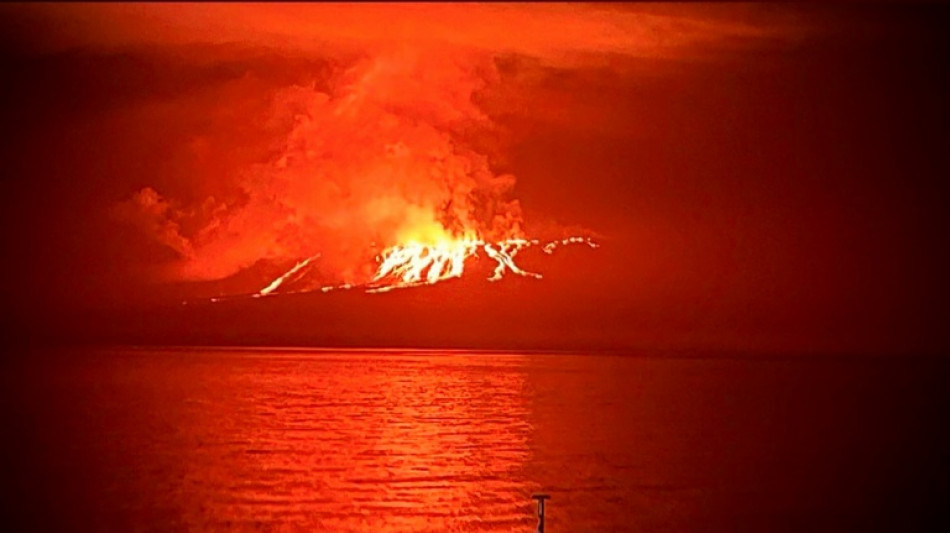
Volcano on uninhabited Galapagos island spews lava / Photo: Handout - Galapagos Ecological Airport/AFP

A volcano on an uninhabited island of Ecuador's famous Galapagos archipelago is spewing lava, authorities said Sunday, potentially threatening an array of unique animal species.

Change text size:

The La Cumbre volcano on the island of Fernandina blew its top late Saturday, the South American country's Geophysical Institute said.

La Cumbre, which stands 1,463 meters (4,799 feet) high, has erupted three times previously since 2017.

The Galapagos archipelago, some 1,000 kilometers (600 miles) off the mainland of Ecuador, has flora and fauna found nowhere else in the world.

Observing its wonders led British scientist Charles Darwin to develop his ground-breaking theory of evolution by natural selection in the 19th century.

La Cumbre has the highest eruption rate of all volcanos in the archipelago, which is a favorite with tourists. Fernandina, with no hotels or restaurants, can only be accessed for short visits from a cruise boat.

The island is host to an endemic species of terrestrial yellow iguana, and in 2019, a type of turtle believed to be extinct was found there.

The Institute said La Cumbre blew a gas cloud about three kilometers into the air, dispersed by the wind without passing over other islands with human settlements such as neighboring Isabela.

It said the duration of the eruption cannot be predicted, nor whether the lava will reach the shore, but data on the volcano's activity suggested this one was likely to be greater than those in 2017, 2018 and 2020.

The Institute advised tourists to stay away if any lava does enter the sea.

A.Saggese--PV

Featured

Researchers Warn 'Bookkeeping Trick' Masks Beef Industry's Methane Emissions

Two new analyses warn that a specialized accounting method known as GWP* enables major beef-producing countries to significantly understate their methane emissions. Researchers from Greenpeace and the University of California, Los Angeles, argue that this metric creates a misleading picture of climate progress, allowing nations to claim neutrality while actual warming continues.

Climate Change Intensified Atlantic Hurricanes, Study Finds

Human-caused climate change significantly intensified Atlantic hurricanes over the past five years, according to a new analysis by Climate Central. The study found that elevated sea surface temperatures increased maximum wind speeds for most storms between 2019 and 2023, as well as every recorded storm in the 2024 season.

UAE oil spill raises questions for desalination operations

An oil spill off the United Arab Emirates that has prompted temporary restrictions on fishing and on access to several beaches has raised concerns over the risk of environmental contamination and the potential impact on desalination plants. The spill is from a vessel that shipping sources have identified as crude oil tanker Gem No.

ExxonMobil urged to re-think Papua New Guinea gas project

One of the world's rarest bats could be at risk if ExxonMobil forges ahead with a Papua New Guinea gas project, a law firm working with impacted landowners warned Monday.

Change text size: