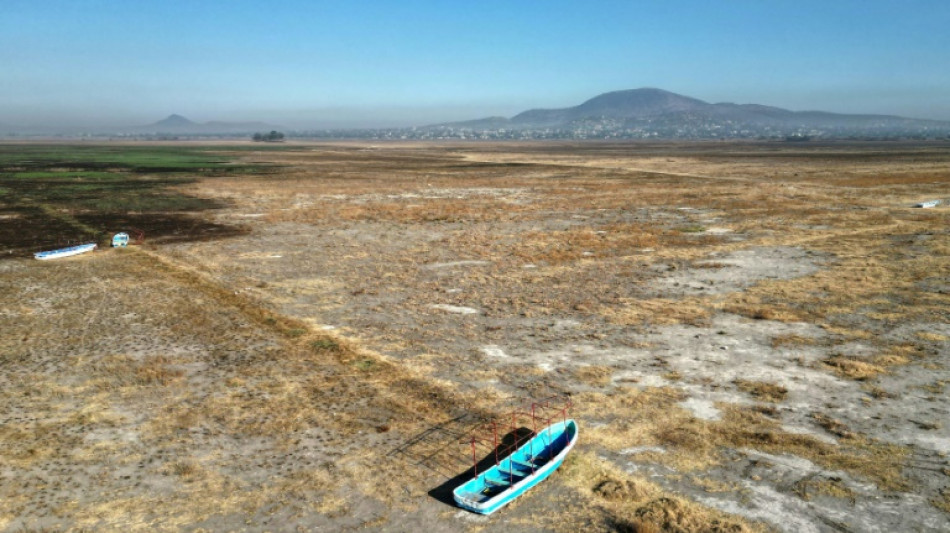
'It was an oasis': Mexico City frets about water / Photo: ALFREDO ESTRELLA - AFP

Agustin Garcia looks with dismay at the dry bed of the lake where he once fished for a living -- a symptom of the water problems facing Mexico and its capital, one of the world's biggest cities.
"It was an oasis here, something beautiful, and now it's dry," the 55-year-old said by the sunbaked shore of Lake Zumpango to the north of Mexico City.
After water supply cuts in several neighborhoods this year, nervousness is growing among the 20 million residents of the Mexico City metropolitan area about whether they will avoid major shortages before the rainy season arrives.
The use of tanker trucks to deliver water has already increased, while some residents have installed big storage tanks as they anxiously await the regular downpours that usually begin in May.
Despite talk in the media of "Day Zero" when the taps might eventually run dry, the government has insisted there is no need to worry.
The increased jitters follow a significantly less wet than usual rainy season last year, combined with hotter than average recent temperatures, which have left reservoirs near Mexico City more depleted than normal.
Rainfall in Mexico in 2023 was 21 percent below average, making it the driest year since record keeping began in 1941, according to a report published by the National Meteorological Service.
"This is part of global environmental change," said Roberto Constantino, an expert at the Metropolitan Autonomous University.
Variations in meteorological cycles are "predominantly causing the lack of water," he told AFP.
Juan Manuel Nunez, an expert at Iberoamericana University, believes that "rapid urbanization and careless management of our water resources" are also part of the problem in Mexico City.
Water leaks involving aging pipes are not uncommon.
Activists have also called for tighter control of water use by major corporations such as breweries and construction companies.
- 'Feel devastated' -
In Zumpango, six boats lay abandoned on the dusty lakebed -- a far cry from past years when Garcia and his colleagues caught carp and other fish.
"I feel devastated, weak, unable to earn an income so that I can continue to support myself," he said.
"We were all used to feeling an early morning breeze, seeing the ducks, seeing the herons," Garcia said, adding that some fishermen gave up and went to the United States to seek work.
Around a dozen rigs, reportedly for drilling and pumping wells to supply Mexico City with water, were seen in the area, further upsetting locals.
"No to water theft. The water is ours," read graffiti on a nearby wall.
The National Water Commission did not respond to AFP's request for information about the equipment.
With less than three months to go before Mexico holds presidential elections, candidates have put the water issue at the heart of their campaigns.
Opposition hopeful Xochitl Galvez has promised to treat 100 percent of wastewater for recycling -- following the example of other cities such as Los Angeles and Singapore.
Ruling party candidate Claudia Sheinbaum has proposed that water be recognized in the constitution as a national resource, and opposes giving new concessions to the private sector.
- 'No lake, no life' -
It is not just Greater Mexico City that has been affected.
In 2022, residents of the northern industrial hub of Monterrey, one of Mexico's wealthiest cities, faced weeks of water rationing due to depleted reservoirs.
In the western state of Michoacan, Lake Cuitzeo -- one of the biggest in the country -- has lost more than half of its surface area.
"The authorities aren't interested. They only remember the lake when they are campaigning," said fisherman Rafael Vazquez.
More than 140 families in his community of La Mina depend on fishing, he said.
A heat wave is forecast to continue in the coming days, offering little sign of respite.
"If there's no lake, there's no life," Vazquez said.
A.Tucciarone--PV