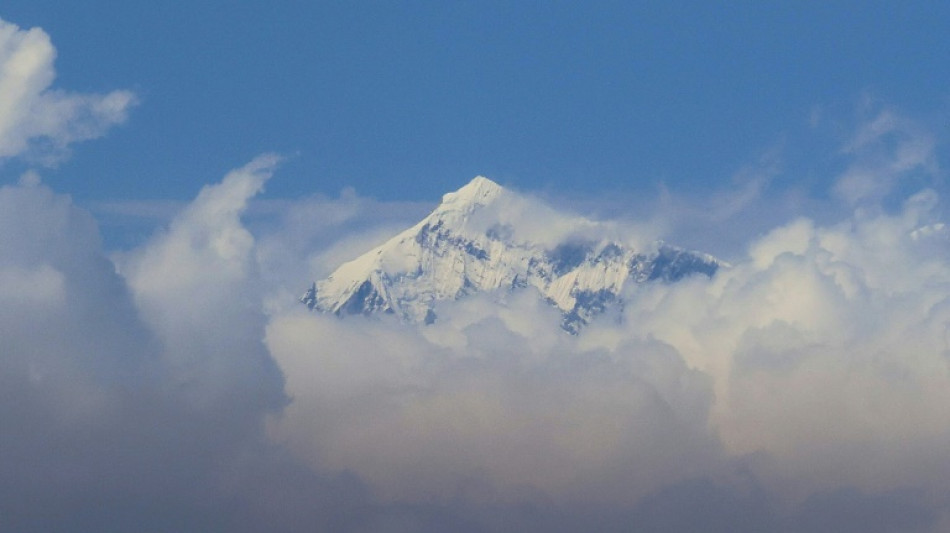
Poo bags and trackers: Nepal orders new Everest rules / Photo: Sebastien BERGER - AFP/File

Nepal has ordered Everest mountaineers to carry mandatory trackers after one of the deadliest seasons last year -- and remove their excrement using compostable bags similar to those used for dog waste.
Eighteen climbers were killed last year, including at least five bodies unrecovered on the highest mountain in the world, where authorities are keen to improve safety as well as clean up a sacred peak where tonnes of trash have been dumped.
GPS trackers are already used by many professional climbers, helping people monitor their progress on the peak, which is important for both security and the sponsors following the climb.
For the spring climbing season, which begins this month and runs to May, Nepal is expected to require less powerful but smaller passive trackers, which can be easily sewn into a jacket and require no power to function. They can be tracked by a handheld detector around 20 metres (66 feet) through packed snow, and several times that in the air.
Enforcing their use will help locate people in case of an accident, officials said.
"The trackers are mandatory for climbers this year, so that if there is an accident their location can be accurately identified," Rakesh Gurung, director of mountaineering at Nepal's Tourism Department, told AFP on Tuesday.
The rapid growth of the climbing industry has created fierce competition among companies for business, and also raised fears that some are cutting corners on safety.
With around 600 climbers and guides reaching the top in 2023, the local rural municipality of Everest has also introduced a slew of new regulations, including mandatory poo bags to be used above base camp.
Tonnes of rubbish -- including empty cans, bottles and gas canisters, discarded climbing gear, and plastic and human waste -- litter the mountain, which has been dubbed the "highest dumpster in the world".
- 'Polluted' -
"Our mountains are getting polluted as well as our water sources," said Mingma Chiri Sherpa, the chairman of Khumbu Pasang Lhamu rural municipality.
"The climbers must use biodegradable bags above the base camp for their waste so it can be properly disposed of on their return," he said.
At base camp, climbers use toilets with barrels to collect waste.
But at higher levels, in the freezing conditions where ice and rock make it difficult to bury, excrement has previously been simply abandoned. That poses a health risk, especially with climbers using melted snow for drinking water.
Poo bags can contain chemicals that help dry and solidify waste, removing the stench, and have been used in other extreme conditions, including in Antarctica and on Denali in the US state of Alaska.
Nepal is home to eight of the world's 14 peaks over 8,000 metres (26,246 feet) and welcomes hundreds of adventurers each spring climbing season, when temperatures are warm and winds are typically calm.
In the capital Kathmandu, expedition operators are busy preparing for their clients, checking mountaineering equipment and packing bags of food for mountaineers.
"So far we expect at least 400 climbers this spring," said Damber Parajuli of the Expedition Operators' Association.
Specialised "icefall doctors" have already set off for Everest base camp, where they will begin setting the climbing route of ropes and ladders.
These highly skilled Nepali mountaineers are the first men on the peak every season, building a route across plunging crevasses and constantly shifting ice, including the treacherous Khumbu icefall.
Three Nepali climbers perished there last April when a block of glacial ice fell and swept them into a crevasse as they were crossing the icefall on a supply mission.
L.Guglielmino--PV