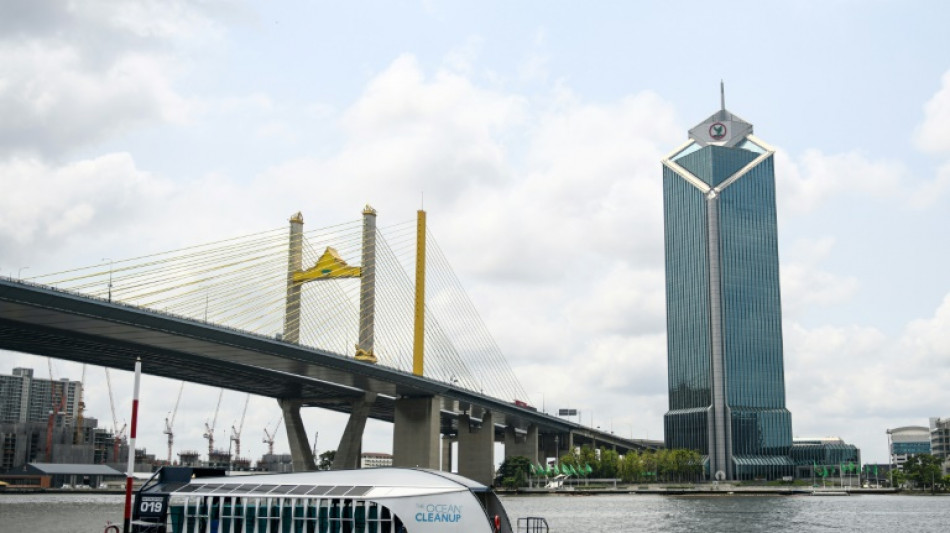
Plastic 'interceptor' tackles trash in Bangkok river / Photo: Amaury PAUL - AFP

Black flies exploded into the air as plastic waste fell from bamboo conveyor belts into skips on a solar-powered barge attempting to remove rubbish from the main river of Thailand's capital Bangkok.
The Ocean Cleanup project launched on the Chao Phraya river, its so-called "interceptor" -- a boat-like structure trailing a floating barrier -- using the river current to funnel plastic into the barge's waiting jaws.
The global non-profit, founded in 2013 by then-teenager Boyan Slat, aims to remove plastic pollution from the seas in part by preventing synthetic waste from ever reaching the oceans.
"The Chao Prayo is actually the largest, the single largest source, of plastic pollution for the Gulf of Thailand," Slat told AFP.
"The Gulf of Thailand is, of course, very important ecologically, but also economically for tourism and fisheries," he said.
"It's very important to us to tackle this plastic pollution here."
The Bangkok project, which has taken roughly two years to launch, is a research collaboration with businesses and local officials and Ocean Cleanup's fifth "interceptor" project researching pollution prevention in Southeast Asia.
Working with Chulalongkorn University, Ocean Cleanup mapped the Chao Phraya's currents to determine the best location for the interceptor -- a difficult task given the river's 500-metre (1,640-foot) width and its busy traffic lanes.
Positioned at the point where around 60 canals join the main river, ticking bamboo-slatted treadmills carry the collected waste into the barge, where it is deposited into bright blue skips and taken ashore to be disposed of by local authorities.
Penchom Saetang, from the environmental group EARTH Thailand, told AFP that while removing plastic from the river was important, getting chemical pollutants out of the water was also vital to restore the river.
"There are several causes (of chemical pollutants) and these include chemical use in the factories, as well as agricultural uses," she said.
A.dCosmo--PV