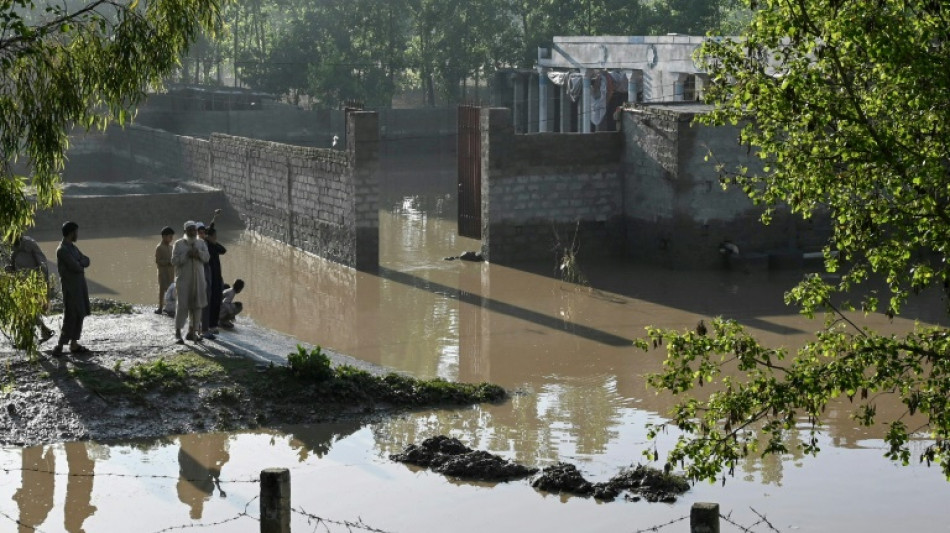
Lightning, downpours kill 65 in Pakistan, as April rain doubles historical average / Photo: Abdul MAJEED - AFP

At least 65 people have died in storm-related incidents including lightning in Pakistan, officials said, with rain so far in April falling at nearly twice the historical average rate.
Heavy downpours between Friday and Monday unleashed flash floods and caused houses to collapse, while lightning killed at least 28 people.
The largest death toll was in northwestern Khyber Pakhtunkhwa, where 32 people have died, including 15 children, and more than 1,300 homes have been damaged.
"All the casualties resulted from the collapse of walls and roofs," Anwar Khan, spokesman for the province's disaster management authority, told AFP on Wednesday.
Villagers whose homes were inundated with water were forced to seek refuge on higher ground, including on the shoulders of motorways, creating makeshift tents with plastic sheeting and bamboo sticks.
"In April, we have observed highly unusual rainfall patterns," Zaheer Ahmad Babar, spokesperson for the Pakistan Meteorological Department, told AFP.
"From April 1st to April 17th, we experienced precipitation levels exceeding the historical average by 99 percent," he added, citing data from the past 30 years as a comparison.
Most of the country experienced a pause in rain on Tuesday and Wednesday, but more downpours are predicted in the coming days.
"Climate change is a major factor behind these unusual weather patterns and above normal rainfalls, but it’s not just Pakistan which is affected, the whole region is experiencing changes in temperature patterns," Babar added.
Pakistan is increasingly vulnerable to unpredictable weather patterns, as well as often destructive monsoon rains that usually arrive in July.
In the summer of 2022, a third of Pakistan was submerged by unprecedented monsoon rains that displaced millions of people and cost the country $30 billion in damage and economic losses, according to a World Bank estimate.
In the latest rains, 21 people including farmers harvesting wheat were killed by lightning in Punjab, Pakistan's most populous province, provincial authorities said.
At least eight people were killed in Balochistan province, including seven struck by lightning, where 25 districts were battered by rain and some areas were flooded.
People living in open, rural areas are at greater risk of being struck by lightning during thunderstorms.
Schools in Balochistan province were ordered shut on Monday and Tuesday, with some reopening on Wednesday, because of the downpours.
At least four people were killed in road accidents linked to flooded roads in southern Sindh province.
O.Merendino--PV