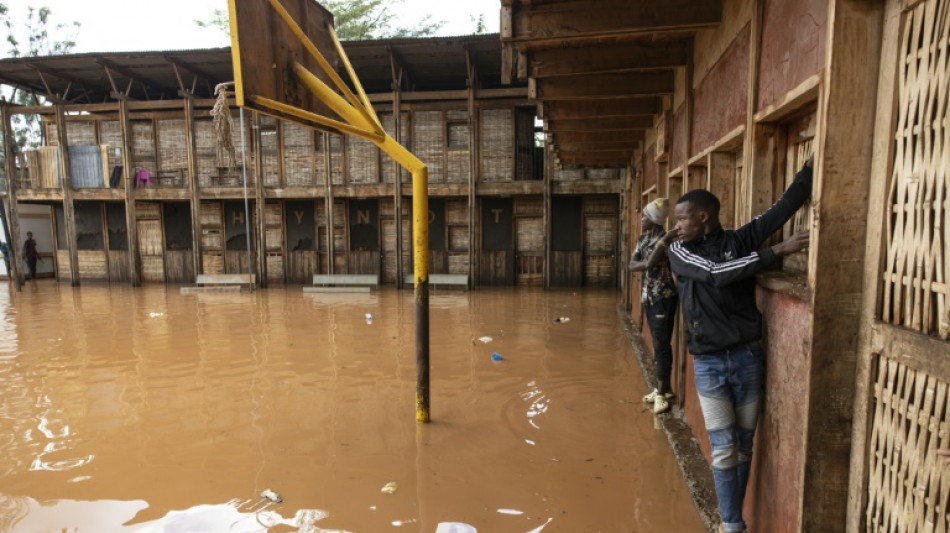
155 killed in Tanzania as heavy rains lash East Africa / Photo: SIMON MAINA - AFP

At least 155 people have died in Tanzania as torrential rains linked to El Nino triggered flooding and landslides, the country's prime minister said Thursday.
Tanzania and other countries in East Africa -- a region highly vulnerable to climate change -- have been pounded by heavier than usual rainfall during the current rainy season, with several dozen deaths also reported in Kenya.
Prime Minister Kassim Majaliwa said more than 200,000 people have been affected by the disaster in Tanzania, with 155 fatalities and 236 people injured.
"The heavy El Nino rains, accompanied by strong winds, floods and landslides in various parts of the country, have caused significant damage," Majaliwa told parliament.
He said homes, property, crops and infrastructure such as roads, bridges, railways and schools had been damaged or destroyed.
The devastating effects of the rains were "primarily due to environmental degradation", he added, blaming deforestation, unsustainable farming practices such as "slash and burn" agriculture and unregulated livestock grazing.
On April 14, the government said a total of 58 people, including children, had been killed in rains and floods since the beginning of the month.
El Nino is a naturally occurring climate pattern typically associated with increased heat worldwide, as well as drought in some parts of the world and heavy rains elsewhere and can have a devastating impact in East Africa.
- Deadly flash floods in Nairobi -
In Kenya, about 45 people have been killed since the start of the rainy season in March, including 13 who lost their lives in flash floods in the capital Nairobi this week.
President William Ruto convened an emergency multi-agency meeting Thursday to respond to the crisis after torrential rains and floods caused chaos across the city, blocking roads and engulfing homes in slum districts.
Some parts of Nairobi remained under water on Thursday, and Kenyans have been warned to stay on alert, with the forecast for more heavy rains across the country in coming days.
Deputy President Rigathi Gachagua told a press briefing that people affected by the floods would be given food and other goods, while those living in the most vulnerable areas would be relocated.
"The government... will do whatever it takes, apply all the required resources in terms of money and personnel to make sure that lives are not lost and the people of Kenya are protected from this disaster," he said.
In Burundi, one of the poorest countries on the planet, around 96,000 people have been displaced by months of relentless rains, the UN and the government said earlier this month.
Meanwhile, the UN humanitarian response agency, OCHA, said in an update this week that in Somalia, the Gu (April to June) rains are intensifying, with flash floods reported since April 19.
It said four people have been reportedly killed and more than 800 people affected or displaced nationwide.
Uganda has also suffered heavy storms that have caused riverbanks to burst, with two fatalities confirmed and several hundred villagers displaced.
Late last year, more than 300 people died in torrential rains and floods in Kenya, Somalia and Ethiopia, just as the region was trying to recover from its worst drought in four decades that left millions of people hungry.
From October 1997 to January 1998, massive floods caused more than 6,000 deaths in five countries in the region.
The UN's World Meteorological Organization (WMO) said in March that El Nino, which peaked in December, was one of the five strongest ever recorded.
Therefore "above normal temperatures are predicted over almost all land areas between March and May", the WMO said in a quarterly update.
burs-txw/kjm
O.Mucciarone--PV