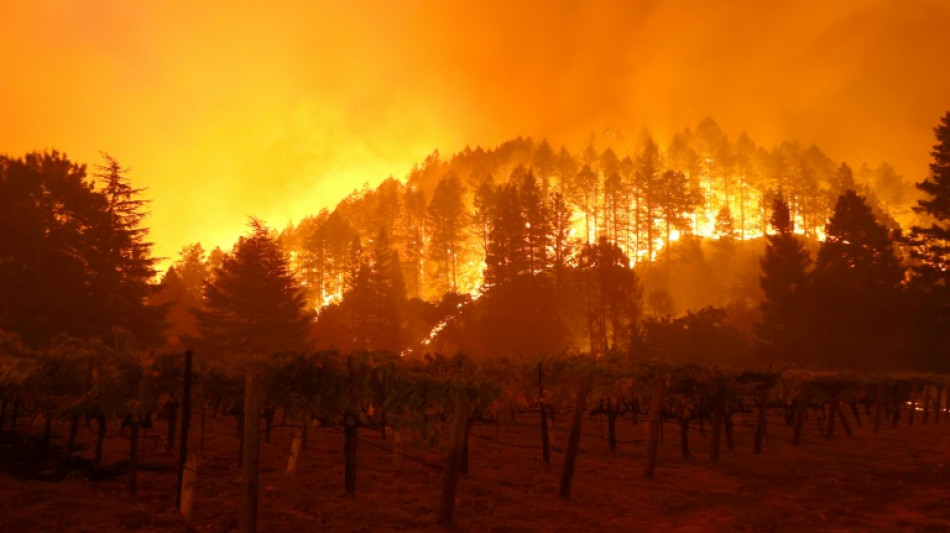
'Extreme' climate blamed for world's worst wine harvest in 62 years / Photo: JUSTIN SULLIVAN - GETTY IMAGES NORTH AMERICA/AFP

World wine production dropped 10 percent last year, the biggest fall in more than six decades, because of "extreme" climate changes, the body that monitors the trade said Thursday.
"Extreme environmental conditions" including droughts, fires and other problems with climate were mostly to blame for the drastic fall, said the International Organisation of Vine and Wine (OIV) that covers nearly 50 wine producing countries.
Australia and Italy suffered the worst, with 26 and 23 percent drops. Spain lost more than a fifth of its production. Harvests in Chile and South Africa were down by more than 10 percent.
The OIV said the global grape harvest was the worst since 1961, and worse even than its early estimates in November.
In further bad news for winemakers, customers drank three per cent less wine in 2023, the French-based intergovernmental body said.
Director John Barker highlighted "drought, extreme heat and fires, as well as heavy rain causing flooding and fungal diseases across major northern and southern hemisphere wine producing regions."
Although he said climate problems were not solely to blame for the drastic fall, "the most important challenge that the sector faces is climate change.
"We know that the grapevine, as a long-lived plant cultivated in often vulnerable areas, is strongly affected by climate change," he added.
France bucked the falling harvest trend, with a four percent rise, making it by far the world's biggest wine producer.
- Less wine being drunk -
Wine consumption last year was however at its lowest level since 1996, confirming a fall-off over the last five years, according to the figures.
The trend is partly due to price rises caused by inflation and a sharp fall in wine drinking in China -- down a quarter -- due to its economic slowdown.
The Portuguese, French and Italians remain the world's biggest wine drinkers per capita.
Barker said the underlying decrease in consumption is being "driven by demographic and lifestyle changes. But given the very complicated influences on global demand at the moment," it is difficult to know whether the fall will continue.
"What is clear is that inflation is the dominant factor affecting demand in 2023," he said.
Land given over to growing grapes to eat or for wine fell for the third consecutive year to 7.2 million hectares (17.7 million acres).
But India became one of the global top 10 grape producers for the first time with a three percent rise in the size of its vineyards.
France, however, has been pruning its vineyards back slightly, with its government paying winemakers to pull up vines or to distil their grapes.
The collapse of the Italian harvest to its lowest level since 1950 does not necessarily mean there will be a similar contraction there, said Barker.
Between floods and hailstones, and damp weather causing mildew in the centre and south of the country, the fall was "clearly linked to meteorological conditions", he said.
S.Urciuoli--PV