Pallade Veneta - Herds of endangered hippos trapped in mud in drought-hit Botswana

Herds of endangered hippos trapped in mud in drought-hit Botswana


Herds of endangered hippos trapped in mud in drought-hit Botswana
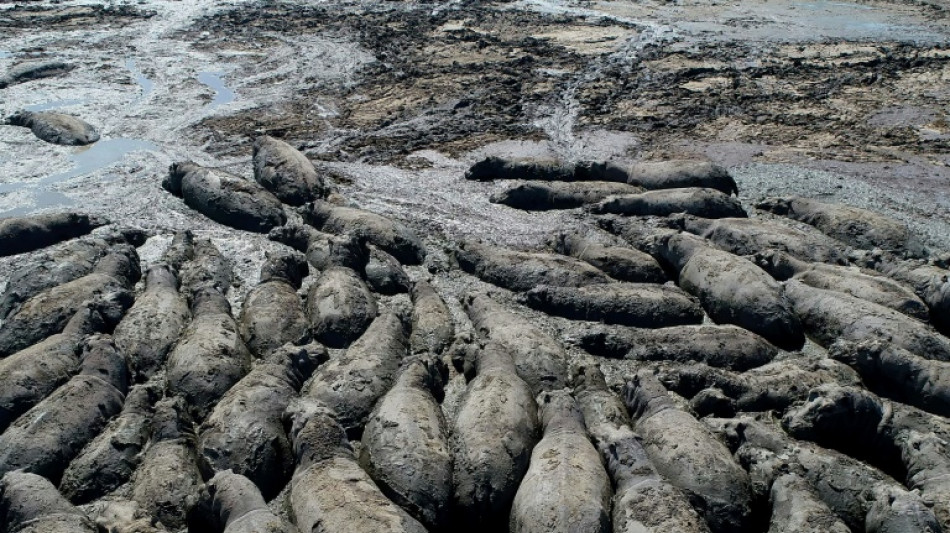
Herds of endangered hippos trapped in mud in drought-hit Botswana / Photo: Monirul Bhuiyan - AFP

Herds of endangered hippos stuck in the mud of dried-up ponds are in danger of dying in drought-struck Botswana, conservation authorities told AFP Friday.

Change text size:

Southern Africa has been affected by severe drought, caused by the El Nino weather phenomenon, which has threatened harvests and plunged millions into hunger. Several countries in the region have recently declared a state of national disaster.

Near the vast wetlands of the Okavango Delta in northern Botswana, the dried-up Thamalakane River has forced herds of hippos to head for natural water reserves close to the tourist town of Maun.

"The river system dries up and animals are in a compromised situation," said Lesego Moseki, spokesperson for Department of Wildlife and National Parks (DWNP) in Botswana's capital Gaborone.

Botswana is home to one of the world's largest populations of hippos living in the wild, estimated at between 2,000 and 4,000 by the International Union for Conservation of Nature (IUCN).

"The riverine vegetation is poor and the hippo in Ngamiland (northwestern district) depends on the water flowing through the Okavango Delta systems," Moseki added. They were still looking into the how many hippos had died in the pools, he said.

Hippos have thick but sensitive skin, meaning they need to bathe regularly to avoid sunburn and usually live in humid areas.

Without water, they can become aggressive and approach villages. Local authorities are calling for hippos to be relocated to reserves to avoid conflict with humans.

El Nino is a naturally occurring climate pattern typically associated with increased heat worldwide, leading to drought in some parts of the world and heavy rains elsewhere.

E.M.Filippelli--PV

Featured

US Buildings Threatened by Wildfires Could Triple by 2060

A new study published in Nature Communications projects that the number of buildings across the contiguous United States threatened by wildfires could almost triple by 2060. Researchers attribute this escalating risk to a combination of climate change, forest mismanagement, and continued development in fire-prone areas, warning that socioeconomically vulnerable communities face disproportionate dangers.

Researchers Warn 'Bookkeeping Trick' Masks Beef Industry's Methane Emissions

Two new analyses warn that a specialized accounting method known as GWP* enables major beef-producing countries to significantly understate their methane emissions. Researchers from Greenpeace and the University of California, Los Angeles, argue that this metric creates a misleading picture of climate progress, allowing nations to claim neutrality while actual warming continues.

Climate Change Intensified Atlantic Hurricanes, Study Finds

Human-caused climate change significantly intensified Atlantic hurricanes over the past five years, according to a new analysis by Climate Central. The study found that elevated sea surface temperatures increased maximum wind speeds for most storms between 2019 and 2023, as well as every recorded storm in the 2024 season.

UAE oil spill raises questions for desalination operations

An oil spill off the United Arab Emirates that has prompted temporary restrictions on fishing and on access to several beaches has raised concerns over the risk of environmental contamination and the potential impact on desalination plants. The spill is from a vessel that shipping sources have identified as crude oil tanker Gem No.

Change text size: