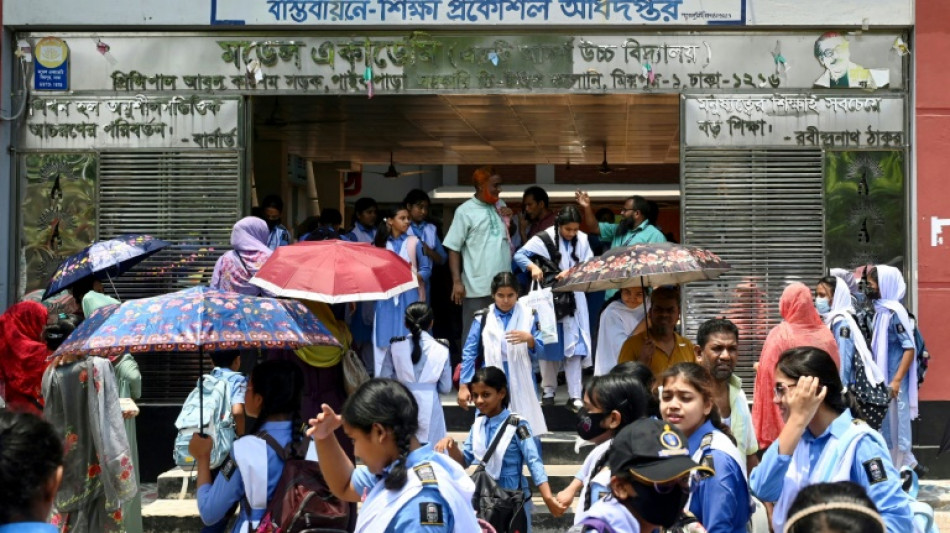
Bangladesh reopens schools despite heat alert / Photo: Munir UZ ZAMAN - AFP

Millions of students returned to their reopened schools across Bangladesh Sunday despite a lingering heatwave that prompted a nationwide classroom shutdown order last weekend.
Average maximum temperatures in the capital Dhaka over the past week have been 4-5 degrees Celsius (7.2-9 degrees Fahrenheit) higher than the 30-year average for the same period, with several more days of hot weather forecast.
Extensive scientific research has found climate change is causing heat waves to become longer, more frequent and more intense.
Classes resumed with anxious relatives accompanying their children to school gates for the start of classes in Bangladesh, which follows the Sunday-Thursday Islamic work week.
"I went to the school with my 13-year-old daughter. She was happy her school was open. But I was tense," said Lucky Begum whose daughter is enrolled at a state-run school in Dhaka.
"The heat is too much," she told AFP. "She already got heat rashes from sweating. I hope she does not get sick."
Around 32 million students were kept at home by the school shutdown, Save the Children said in a statement this week.
A directive from education authorities announcing the resumption of classes said preschools would remain shut, while primary school hours would be shortened.
Bangladesh's weather bureau said Sunday the heatwave would continue for at least the next three days.
Forecaster Kazi Jebunnesa said rain would likely bring some relief after Thursday.
Another weather bureau meteorologist, Muhammad Abul Kalam Mallik, told AFP Bangladesh had not seen such an intense heatwave since records began in 1948.
"It is a record as far as the duration and the coverage area in the country are concerned," he said, adding that the searing temperatures were affecting about three-quarters of the country.
Mallik said climate change and man-made causes including rapid urbanisation, forest clearance, shrinking water bodies and increased usage of air conditioning were to blame.
"The trouble is, we will see more such severe heatwaves in the future," he said.
L.Barone--PV