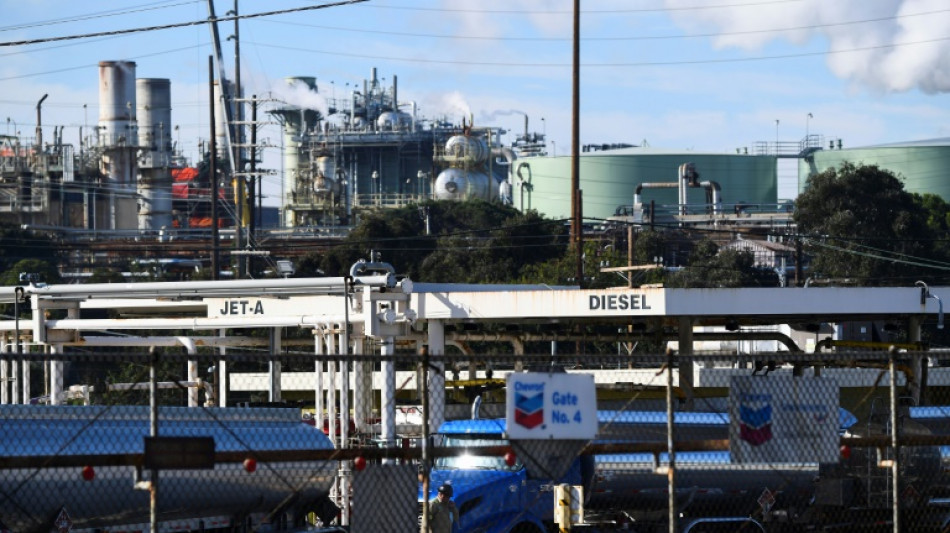
US lawmakers accuses oil giants of climate 'doublespeak' / Photo: Patrick T. FALLON - AFP/File

The oil industry's public relations strategy has evolved from climate science denial to "disinformation and doublespeak" to counter meaningful environmental policies, US congressional Democrats said in a report Tuesday.
The report accuses oil giants such as ExxonMobil and Chevron -- along with industry trade groups -- of a long-running campaign aimed at defending the industry's interests at the expense of the planet.
"Big Oil has run campaigns to confuse and mislead the public while working unceasingly to lock down a fossil fuel future," said Maryland Democratic Representative Jamie Raskin, who co-authored the report with Rhode Island Democratic Senator Sheldon Whitehouse.
"Big Oil continues to conceal the facts about their business model and obscure the actual dangers of fossil fuels, including natural gas, in order to block the climate action we need," Raskin said.
The report -- and documented evidence released in parallel by the lawmakers -- presents decades-old analysis by oil industry scientists warning of climate change that were cast aside or deemphasized in favor of industry communications that emphasized the uncertainty around climate science.
As the industry has shifted course in response to rising scientific consensus around climate change, oil companies' approach has evolved from "denying climate science to spreading disinformation and perpetuating doublespeak about the safety of natural gas and the industry's commitment to reducing greenhouse gas emissions," the report said.
Examples of "confusing and misleading narratives" propagated by the industry include the public backing of carbon capture technology while privately calling it prohibitively expensive without extensive government support.
The American Petroleum Institute, which was targeted by the report along with individual oil companies, defended the industry's balance of environmental and economic priorities.
"At a time of persistent inflation and geopolitical instability, our nation needs more American energy –- including more oil and natural gas –- and less unfounded election year rhetoric," an API spokesperson said.
"America's energy workers are focused on delivering the reliable, affordable oil and natural gas Americans demand while scaling the next generation of low-carbon technologies like hydrogen and carbon capture, and any suggestion to the contrary is inaccurate."
A.Saggese--PV