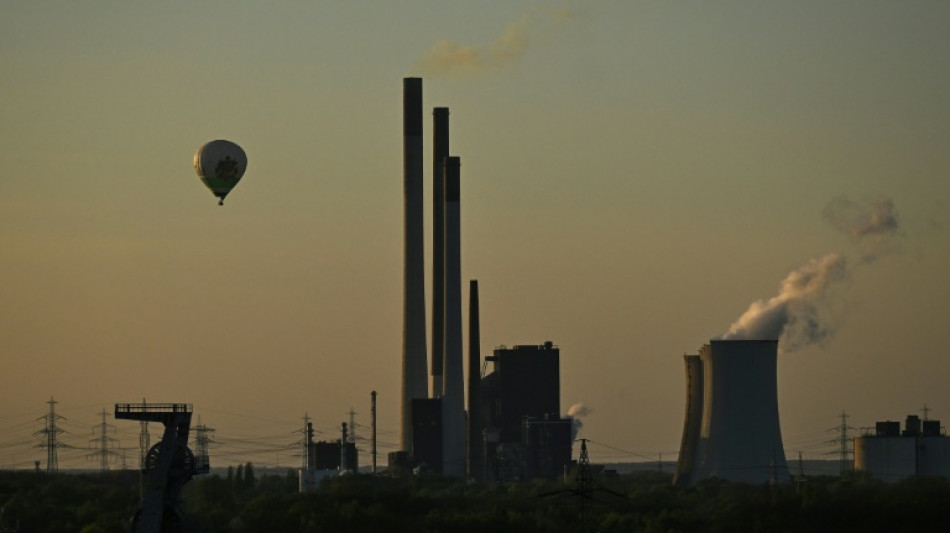
Banks slow to limit coal financing: NGO / Photo: Ina FASSBENDER - AFP/File

Banks lent almost $470 billion to the coal industry between 2021 and 2023, according to a study published Thursday by German environmental group Urgewald, which criticised the scale of financing amid rising global temperatures.
Of the 638 banks surveyed, only 140 -- or about one in five -- had significantly reduced their exposure to the coal sector since 2016, the report found.
Some 75 banks by contrast saw their investments in coal increase in the same period, according to the study led by the German NGO and partner organisations.
Commercial banks were not reducing the amount they put into the coal industry at a rate sufficient to hit the Paris climate goal to limit global warming to 1.5C degrees above preindustrial times, Urgewald said.
"Without an end to coal financing, it is difficult to imagine that we can get out of coal in time," said Urgewald's finance lead Katrin Ganswindt, calling for more regulation in the area.
In 2023, the banks financed the coal industry to the tune of $136 billion, only 20 percent less than in 2016, according to the study.
More than 90 percent of the financing came from institutions in China, the United States, Japan, Canada, India, Britain and Indonesia.
US banks in particular had seen their investments in coal rise by 22 percent between 2021 and 2023 to $19.8 billion, Urgewald said.
Meanwhile, European banks reduced the amount they gave to the coal industry by 51 percent in the same period to a total of $6.5 billion.
The study comes just after ministers from the G7 developed economies agreed a timeframe for phasing out coal-fired power plants.
The representatives from the United States, Canada, France, Italy, Germany, Britain, Japan set a goal to end their use in the mid-2030s.
In Europe, banks are under increasing pressure from investors and supervisors alike to divest from polluting sectors.
In January, the European Central Bank said that most banks it oversees had not brought their portfolios in line with the Paris targets, leaving them exposed to greater climate risks.
F.Abruzzese--PV