Pallade Veneta - World's first wooden satellite built by Japan researchers

World's first wooden satellite built by Japan researchers


World's first wooden satellite built by Japan researchers
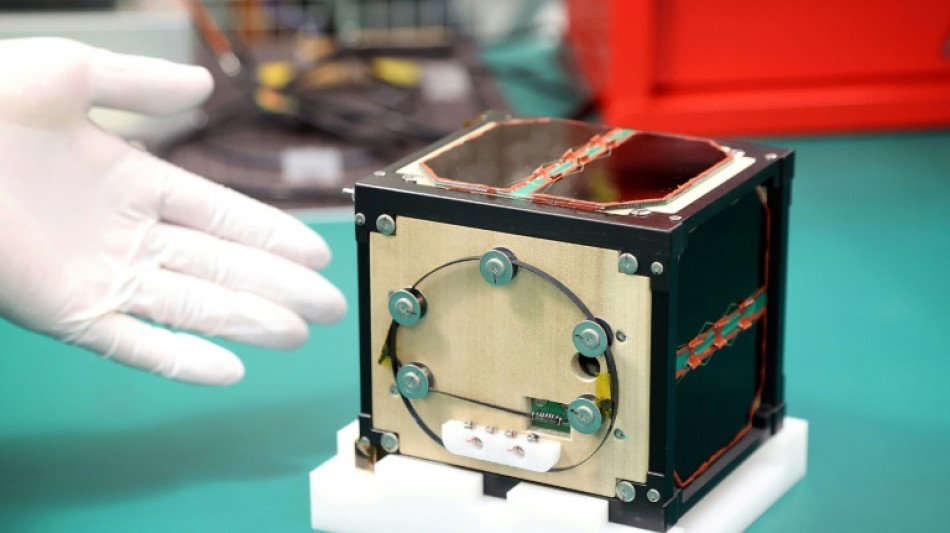
World's first wooden satellite built by Japan researchers / Photo: STR - JIJI PRESS/AFP

The world's first wooden satellite has been built by Japanese researchers who said their tiny cuboid craft will be blasted off on a SpaceX rocket in September.

Change text size:

Each side of the experimental satellite developed by scientists at Kyoto University and logging company Sumitomo Forestry measures just 10 centimetres (four inches).

The creators expect the wooden material will burn up completely when the device re-enters the atmosphere -- potentially providing a way to avoid the generation of metal particles when a retired satellite returns to Earth.

These metal particles could have a negative impact on the environment and telecommunications, the developers said as they announced the satellite's completion on Tuesday.

"Satellites that are not made of metal should become mainstream," Takao Doi, an astronaut and special professor at Kyoto University, told a press conference.

The developers plan to hand the satellite, made from magnolia wood and named LignoSat, to space agency JAXA next week.

It will be sent into space on a SpaceX rocket from the Kennedy Space Center in September, bound for the International Space Station (ISS), they said.

From there, the satellite will be released from the Japanese ISS experiment module to test its strength and durability.

"Data will be sent from the satellite to researchers who can check for signs of strain and whether the satellite can withstand huge changes in temperature," a Sumitomo Forestry spokeswoman told AFP on Wednesday.

Also on Tuesday, a rocket carrying a separate sophisticated satellite -- a collaboration between the European Space Agency (ESA) and JAXA -- blasted off from California on a mission to investigate what role clouds could play in the fight against climate change.

The EarthCARE satellite will orbit nearly 400 kilometres (250 miles) above Earth for three years.

R.Zaccone--PV

Featured

US Buildings Threatened by Wildfires Could Triple by 2060

A new study published in Nature Communications projects that the number of buildings across the contiguous United States threatened by wildfires could almost triple by 2060. Researchers attribute this escalating risk to a combination of climate change, forest mismanagement, and continued development in fire-prone areas, warning that socioeconomically vulnerable communities face disproportionate dangers.

Researchers Warn 'Bookkeeping Trick' Masks Beef Industry's Methane Emissions

Two new analyses warn that a specialized accounting method known as GWP* enables major beef-producing countries to significantly understate their methane emissions. Researchers from Greenpeace and the University of California, Los Angeles, argue that this metric creates a misleading picture of climate progress, allowing nations to claim neutrality while actual warming continues.

Climate Change Intensified Atlantic Hurricanes, Study Finds

Human-caused climate change significantly intensified Atlantic hurricanes over the past five years, according to a new analysis by Climate Central. The study found that elevated sea surface temperatures increased maximum wind speeds for most storms between 2019 and 2023, as well as every recorded storm in the 2024 season.

UAE oil spill raises questions for desalination operations

An oil spill off the United Arab Emirates that has prompted temporary restrictions on fishing and on access to several beaches has raised concerns over the risk of environmental contamination and the potential impact on desalination plants. The spill is from a vessel that shipping sources have identified as crude oil tanker Gem No.

Change text size: