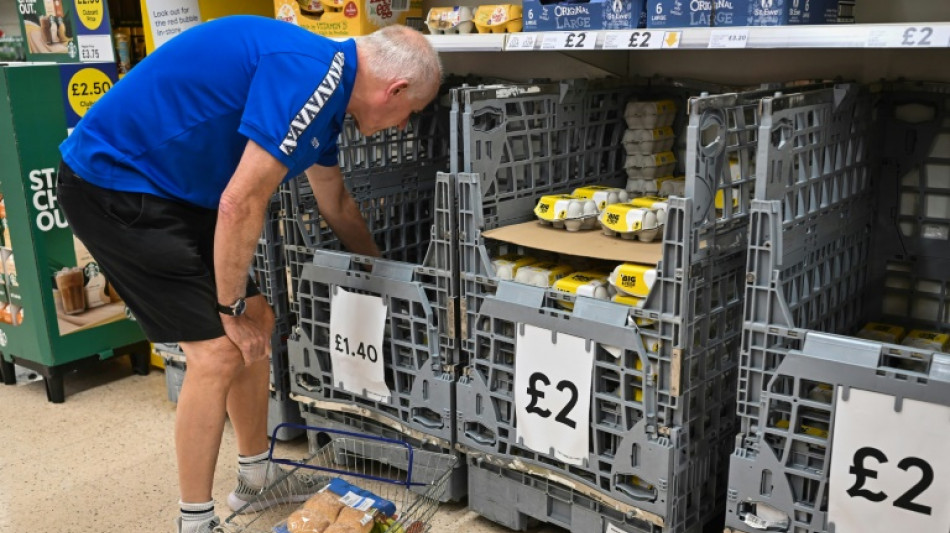
UK inflation slows to central bank's 2% target / Photo: JUSTIN TALLIS - AFP/File

British inflation slowed in May to the central bank's two-percent target, official data showed Wednesday, boosting Prime Minister Rishi Sunak's struggling election campaign.
The Consumer Prices Index fell as expected from 2.3 percent in April, the Office for National Statistics said in a statement citing easing growth in food prices.
That follows almost three years Britain's above-target inflation, which last stood at two percent in July 2021 before surging higher in a cost-of-living crisis.
The news sets the scene for the July 4 general election which Sunak's Conservatives are tipped to lose badly to Keir Starmer's main opposition Labour Party, according to opinion polls.
Sunak hailed the inflation slowdown, but Labour slammed the Conservatives' stewardship of the economy after 14 years in power.
"It's very good news, because the last few years have been really tough for everybody," Sunak told LBC radio.
"Inflation is back to target, and that means people will start to feel the benefits and ease some of the burdens on the cost of living, and it's because of that economic stability that we've restored."
The Bank of England will meet Thursday but it is expected to sit tight on interest rates, as is customary ahead of UK elections.
- 'Worse off' -
After peaking at 11.1 percent in October 2022, consumer price growth has cooled following a series of interest-rate hikes by the UK central bank.
Britain's economy, however, stagnated in April after emerging from recession in the first quarter of the year, official data showed last week.
Prices are still rising on top of the sharp increases seen in recent years but at a slower rate, as businesses and households weather the easing cost-of-living crunch.
"After 14 years of economic chaos under the Conservatives, working people are worse off," said Labour finance spokesperson Rachel Reeves.
"Prices have risen in the shops, mortgage bills are higher and taxes are at a 70-year high," Reeves said.
"Labour has a plan to make people better off bringing stability back to our economy."
- No surprises -
The BoE began a series of rate hikes in late 2021 to combat inflation, which rose after countries emerged from Covid lockdowns and accelerated after Moscow invaded Ukraine.
The institution last month held its main interest rate at a 16-year high of 5.25 percent but hinted at a summer reduction as UK inflation cools further.
Added to the mix, elevated interest rates have worsened the cost-of-living squeeze because they increase the cost of borrowing, thereby cutting disposable incomes.
"The BoE will be encouraged by the slowdown in headline inflation, and while concerns will remain over elevated underlying price pressures, further falls in services inflation are anticipated over the coming months," said KPMG UK chief economist Yael Selfin.
"Today's data are unlikely to spur a surprise rate cut tomorrow, however, the (bank) could have sufficient evidence to begin its easing cycle in August."
Influential business lobby the Confederation of British Industry added that the stage was now set for the BoE to trim rates in August.
"Another fall in inflation in May will come as welcome news to households as we move towards a more benign inflationary environment," said CBI economist Martin Sartorius.
"However, many will still be feeling the pinch due to the level of prices being far higher than in previous years, particularly for food and energy bills."
A.Saggese--PV