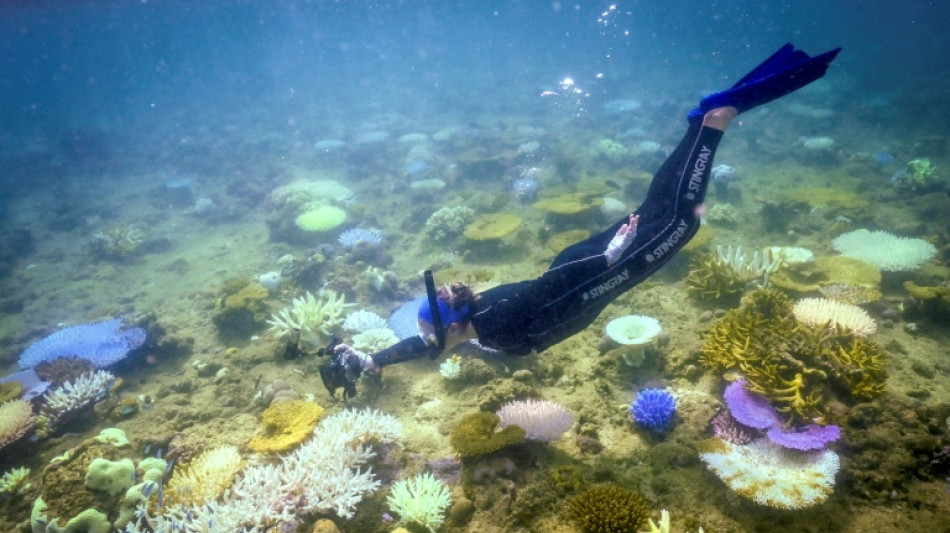
'Urgent' for Australia to protect Great Barrier Reef: UNESCO / Photo: DAVID GRAY - AFP/File

Australia must take "urgent" action to protect the Great Barrier Reef, including setting more ambitious climate targets, the UN's cultural organisation has warned.
In a draft decision, UNESCO also asked Australia to submit an update on protection efforts early next year, but stopped short of recommending the reef be placed on its list of endangered heritage sites.
The decision, released late Monday, was welcomed by Australia's Minister for the Environment and Water Tanya Plibersek as a "huge win".
"We are acting on climate change, improving local water quality, protecting our marine life, dealing with invasive species, and investing a record amount of money into reef programs," she said in a statement Tuesday.
But the UNESCO decision, which will guide a meeting of the World Heritage Committee in New Delhi next month, warns the world's largest coral system "remains under serious threat."
"Urgent and sustained action is of utmost priority," it added.
The fate of the reef has been a recurrent source of tension between UNESCO and Australian authorities, with the World Heritage Committee threatening to put the world's largest coral system on its list of "in danger" global heritage sites.
Behind-the-scenes diplomacy and lobbying from Australia have avoided such a move and commitments from the Labour government of Anthony Albanese have drawn praise from the Paris-based organisation.
The draft decision welcomed some of the steps taken by Australia, including on water quality around the reef and restrictions on gill-net fishing.
But it expressed "high concern" about land clearing threatening water quality, and said Australia should "set more ambitious emission reduction targets."
Citing the ongoing mass bleaching of the reef, it asked for an update by next February, rebuffing Australia's request to wait until 2026.
It also urged Australia to make public "as soon as possible" details on reef mortality rates in the latest round of bleaching.
Plibersek said the agency had recognised Australian efforts to protect the reef.
"Today's draft decision is a huge win for Queensland, a huge win for the thousands of people who rely on the reef for work, and a huge win for all the plants and animals that call it home," she said.
Environmental groups, however, said the UNESCO decision should be a "wake-up call".
"UNESCO has asked Australia to set more ambitious climate targets, and given us a February 2025 deadline to submit a progress report -- the clock is ticking," said Greenpeace Australia Pacific CEO David Ritter.
The World Wide Fund for Nature-Australia also released new images on Tuesday showing bleached and dead coral on the reef.
The group urged Australia to commit to a federal emissions reduction target of at least 90 percent below 2005 levels by 2035 and to stop approving new fossil fuel projects.
Australia currently targets reducing greenhouse gas emissions by 43 percent from 2005 levels by 2030 and achieving net zero by 2050.
B.Fortunato--PV