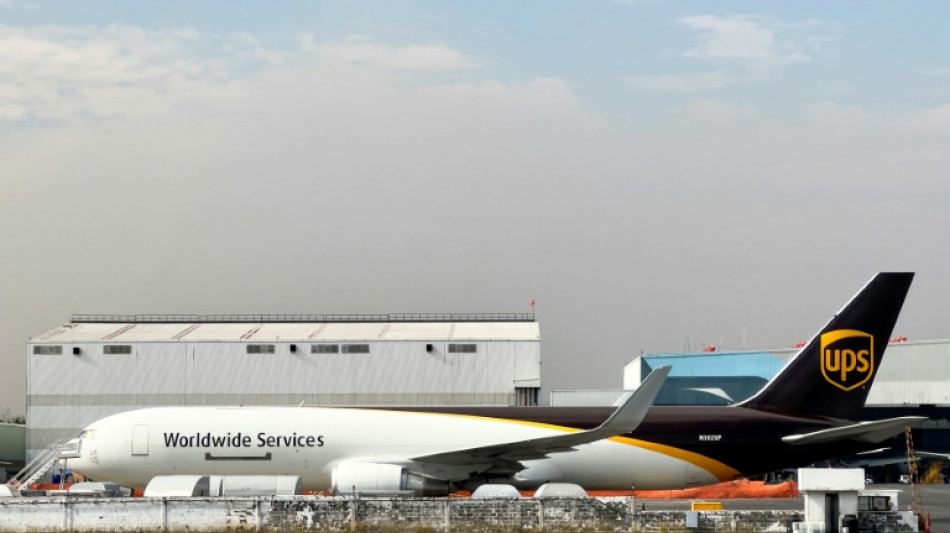
NGO denounces rising air freight pollution / Photo: Daniel SLIM - AFP/File

An environmental pressure group denounced Wednesday the rising emissions of the air freight industry, which has been boosted by global supply chain difficulties and rising online commerce.
According to Stand Earth, a US-Canadian group, pollution from the air freight sector has increased by 25 percent since 2019.
A report by the group fournd that market distortions caused by Covid-19 pandemic travel restrictions and supply chain disruptions boosted the air freight cargo sector.
"Prior to the Covid-19 pandemic, air freight was dominated, logically, by perishable goods, time-sensitive deliveries, and luxury items," said the report.
The pandemic forced industries to shift to air freight to transport a greater variety of goods.
"What many assumed was a pandemic anomaly, however, is actually not only continuing, but in some cases growing," it said.
"While FedEx, UPS, and Amazon celebrate a new norm in the shipping industry, their success comes at a dire cost," the report said.
It said these "Big Three" players in the sector were responsible for 27 percent of global air freight greenhouse gas emissions -- the equivalent of 4.45 million homes in the United States.
Stand Earth reproached Amazon for its rapid delivery business strategy -- with same-day or overnight deliver with its Prime membership -- for driving growth in air freight emissions.
Online commerce has exploded in recent years, rising from $2.1 trillion in 2019 to $3.6 trillion in 2023, according to US Commerce Department figures.
While the group targets the specialised air freight firms in its report, they make up only half the market, with commercial airlines carrying the rest on passenger flights.
According to airline trade association IATA, 62 million tonnes is expected to be shipped by air freight this year, a 7.6 percent increase from 2019.
Only one percent of global trade volume travels by air, but in terms of value air freight accounts for 35 percent.
S.Urciuoli--PV