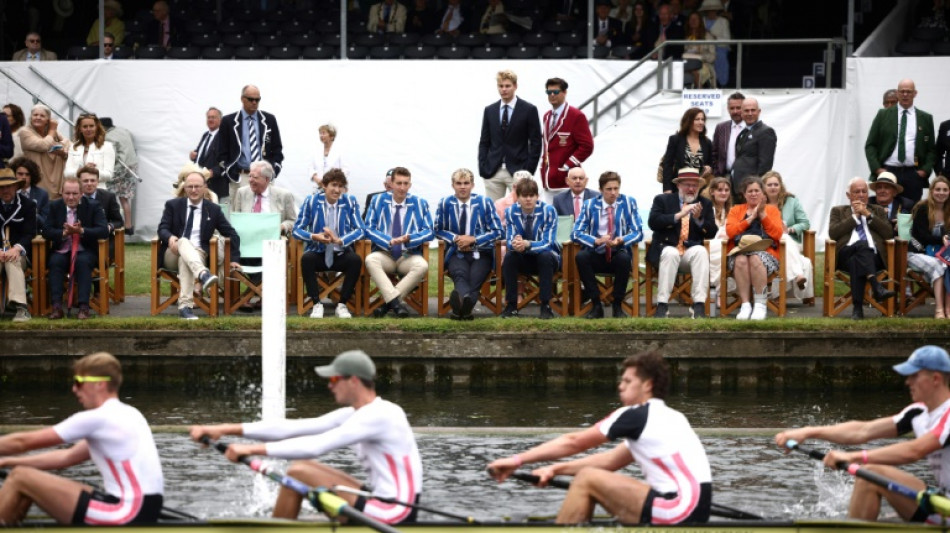
E.coli warning before UK's Henley regatta / Photo: HENRY NICHOLLS - AFP

UK water quality campaigners warned on Friday of "very high E.coli" levels in the River Thames west of London, just days before rowers were due to take part in the Henley Royal Regatta.
The discovery comes at a time when the government and privatised water companies are under mounting pressure to curb the high levels of raw sewage pumped into rivers, lakes and the sea around the UK.
In March this year, rowers taking part in the annual Boat Race between Oxford and Cambridge universities were told not to enter the Thames because of high levels of E.coli.
The six-day Henley Royal Regatta, which starts on July 2, is a key event in the British social calendar, attracting crews from clubs across the world to the stretch of river south of Oxford.
But the River Action group said citizen scientists from its Henley and Marlow group found levels of E.coli bacteria more than 27 times higher than the level deemed poor for bathing water by the government's Environment Agency.
"Using a Fluidion World Health Organization verified E. coli analyser, and results analysed by Earthwatch, the tests revealed levels of E.coli up to 25,000 CFU (colony forming units) per 100ml," the group said.
River Action chief executive James Wallace pointed the finger at privatised supplier Thames Water.
It has faced fierce criticism for missing targets to reduce leaks and slash sewage discharges into rivers.
- Investment needed urgently -
"The river pollution is most likely the fault of Thames Water," Wallace said.
"On behalf of rowers and Thames communities, we demand that they stop this deluge of raw sewage, which threatens river users with serious sickness and the river's biodiversity. This is a health emergency," he added.
He urged the government that will take power after the country's July 4 general election to "get a grip of the water pollution crisis and ensure that water companies, including Thames Water, invest urgently in upgrading wastewater treatment plants and fix their leaky infrastructure".
River Action says its citizen scientists carry out regular water quality nationwide because government regulators and the industry fails to do so.
In February, it said English rivers were in a "desperate condition", with poor water quality due to pollution from fertiliser, livestock and sewage.
Clean rivers campaigner Feargal Sharkey, best known as the lead singer of the 1970s punk band The Undertones, urged on the new government to act against Thames Water.
"The government has allowed Thames Water to accrue £15 billion ($19 billion) in debt rather than invest in maintaining and upgrading their sewage infrastructure," River Action quoted him as saying.
This "frequent polluter" should be put into "special administration and refinanced without a public bail-out, with the new government assuring its 15 million customers they will not pay the price of decades of deregulation and profiteering”, Sharkey added.
O.Mucciarone--PV