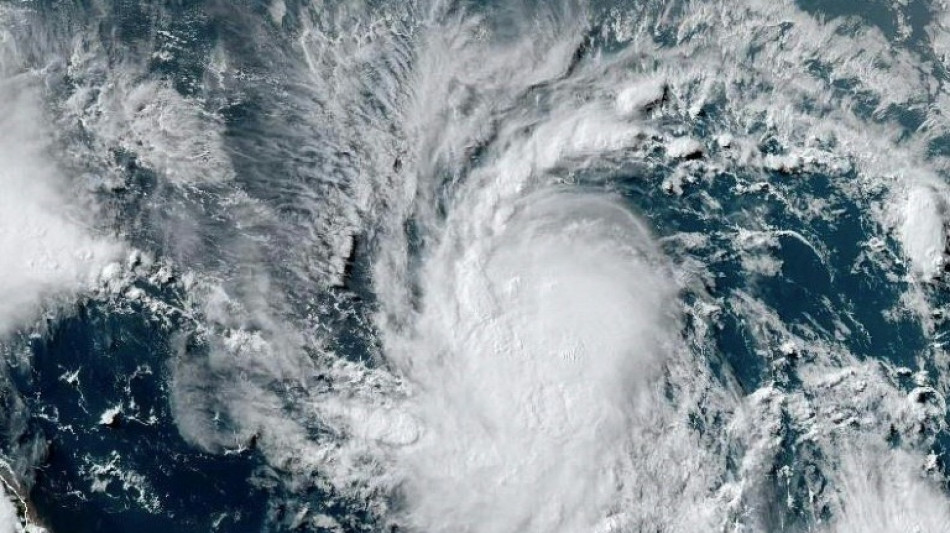
Caribbean on alert for Hurricane Beryl, first of 2024 season / Photo: HANDOUT - NOAA/GOES/AFP

Much of the southeast Caribbean was on alert Saturday as Beryl strengthened into the first hurricane of the 2024 Atlantic season, with forecasters warning it will swiftly become a major storm.
The US National Hurricane Center (NHC) said Beryl -- currently churning in the Atlantic Ocean about 720 miles (1160 kilometers) east of Barbados -- would become a "dangerous major hurricane" by the time it reached the Windward Islands late Sunday into Monday.
Barbados was under a hurricane warning, while St Lucia, St Vincent and the Grenadines and Grenada all had hurricane watches in place, the NHC said in its latest advisory.
In the Barbadian capital Bridgetown, cars were seen lining up at gas stations, while super markets and groceries stores were crowded with shoppers buying food, water and supplies.
A major hurricane is considered a Category 3 or higher on the Saffir-Simpson scale, with winds of at least 111 miles per hour.
Such a powerful storm forming this early in the Atlantic hurricane season -- which runs from early June to late November -- is extremely rare, experts said.
"Only 5 major (Category 3+) hurricanes have been recorded in the Atlantic before the first week of July. Beryl would be the sixth and earliest this far east in the tropical Atlantic," hurricane expert Michael Lowry posted on X, formerly Twitter.
The NHC said as of Saturday afternoon that Beryl's maximum sustained winds had increased to near 75 miles per hour (120 km/h) with higher gusts.
"Hurricane conditions are expected in the hurricane warning area beginning Sunday night," it said, warning of heavy rain, flooding, and "life-threatening winds and storm surge."
"Wind speeds atop and on the windward sides of hills and mountains are often up to 30 percent stronger than the near-surface winds indicated in this advisory, and in some elevated locations could be even greater," the NHS said.
The Saffir-Simpson wind scale designates Category 1 hurricanes as having wind speeds at least 74 miles per hour, up to Category 5 storms with winds of 157 mph or higher.
The US National Oceanic and Atmospheric Administration (NOAA) said in late May that it expects this year to be an "extraordinary" hurricane season with up to seven storms of Category 3 or higher.
The agency cited warm Atlantic ocean temperatures and conditions related to the La Nina weather phenomenon in the Pacific for the expected increase in storms.
In recent years, extreme weather events including hurricanes have become more frequent and more devastating as a result of climate change.
E.M.Filippelli--PV