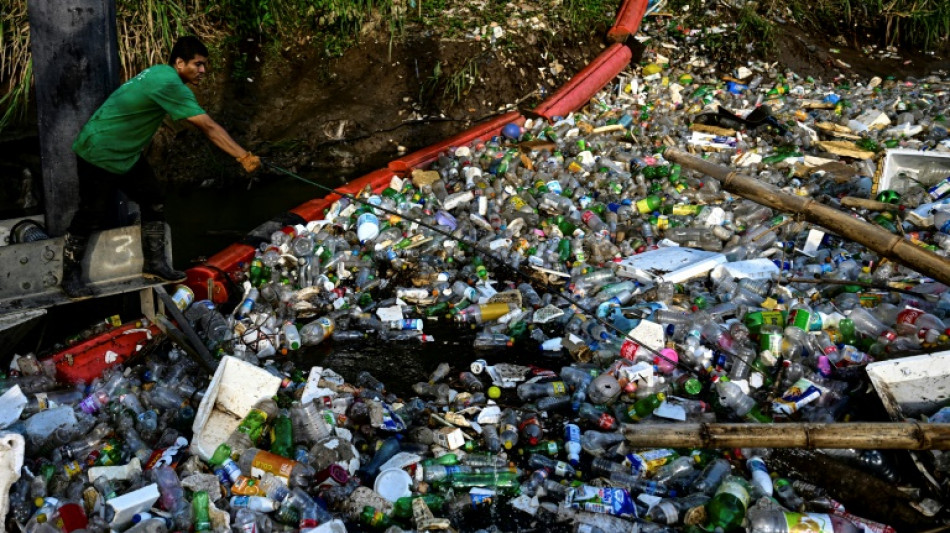
Panama's water wheel trash collector keeps plastic at bay / Photo: Martin BERNETTI - AFP

A trash-collecting machine powered by a water wheel and solar panels has prevented hundreds of tons of plastic and other garbage from Panama from littering mangroves and the ocean.
All kinds of trash flow down rivers running through Panama City and end up on the coastline of the Central American nation.
To combat the pollution, the nonprofit Marea Verde Foundation installed a machine called Wanda two years ago to collect and separate trash for recycling.
"We've captured 256,000 kilos of waste that would be in the mangroves and sea if it had not been for Wanda," said Laura Gonzalez, the foundation's executive director.
The garbage is stopped by a barrier across the Juan Diaz River that runs through Panama City before several workers separate the waste, which is sent by a long conveyor belt to a huge container to be recycled.
Wanda also has solar panels in case the hydropower system that harnesses the energy of the river current fails.
No other river in Panama has a similar system, so tons of garbage continue to reach the sea.
The country's coastal mangroves are a vital resting place for hundreds of thousands of migratory birds, but pollution and urban growth pose a serious threat.
Experts estimate that 30 percent of Panama City's garbage goes uncollected, and that around 100,000 tons of the country's waste end up in the sea every year.
When it rains, rising waters carry away garbage that is often dumped on riverbanks in slums of the city of 1.4 million people.
"We're working hard every day to ensure that this waste does not reach the shore," Ezequiel Vargas, leader of the crew that operates Wanda, told AFP.
"Sadly, the garbage arrives constantly every day," he said.
- 'Environmental disaster' -
Uncollected garbage litters the streets and residential areas of Panama City and its surrounding areas, while on the coast, there are piles of all kinds of waste.
Environment Minister Juan Carlos Navarro called the state of the rivers an "environmental disaster" in July when he took office.
"We cannot continue polluting our rivers and seas," he said.
According to a report by the United Nations Environment Programme, Panama City generates around 2,300 tons of garbage every day, of which 30 percent -- mostly plastics -- ends up in rivers, on the coast and in the sea.
Some 61,500 tons of solid waste from Panamanian cities reach the sea every year through sewers and drains, it said.
The trash captured by Wanda includes plastic bottles, shampoo containers and footballs.
"It's crazy. We received a plastic unicorn a few days ago," Gonzalez said.
According to Marea Verde, there are eight other similar facilities around the world, including one in the US city of Baltimore, but Wanda is the only one of its kind in Latin America.
It began operating in September 2022 and captured 130 tons of waste in its first year.
But the amount of rubbish dumped in the river continues to increase.
"This year we will probably exceed what we collected in the first year," Gonzalez said.
L.Bufalini--PV