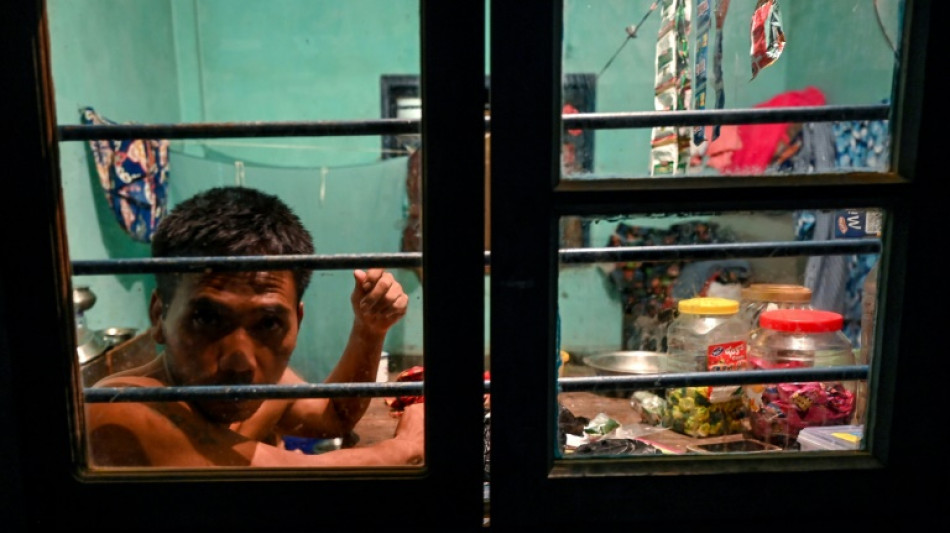
Forced to flee: Despair after India deadly ethnic clashes / Photo: Arun SANKAR - AFP

Deadly ethnic violence in India's troubled Manipur state divided communities but each side tells similar stories of loved ones murdered, homes torched and harsh new lives in camps.
At least 120 people have been killed since May in armed clashes between the predominantly Hindu Meitei majority and the mainly Christian Kuki in the northeastern state. Many in Manipur believe the number could be higher.
Some 50,000 people have been forced to flee, among them teacher Ranjana Moirangthem, who was evacuated by the army after a terrifying night sheltering with 25 neighbours crowded in a room as gun battles between gangs raged around them.
Moirangthem, a Meitei living in what has become a Kuki-only area of Churachandpur, fled with just the clothes she was wearing. In her panic, she forgot the education certificates she needs to find work.
She later asked a Kuki friend to rescue her precious documents but was told her home was likely among the thousands set on fire.
"I was a teacher," she said. "I don't know what to do now that I don't have anything to prove my qualification."
She now lives on government and charity handouts in a crowded camp in Moirang district, with around 250 people living in a guesthouse with mattresses covering every space on the floor.
"I just want to go back," she said. "Churachandpur is where I have lived all my life -- it is my home too."
- 'Houses on fire' -
L. Sonia, another Meitei in the same camp, said she made desperate calls to local politicians when gangs rampaged through her neighbourhood in Churachandpur.
"Their problem is with the government, right? Why set our houses on fire?" she asked angrily.
"People are moved to relief camps after floods, but they get to go back to their homes... What do we do?"
The far-flung states of northeast India -- sandwiched between Bangladesh, China and Myanmar -- have long been a tinderbox of tensions between different ethnic groups.
In Manipur, conflict erupted from a mix of causes including competition for land and public jobs, with both sides blaming state and national government for failing to stop the violence.
India's Interior Minister Amit Shah has promised an "impartial investigation" into the violence and has said the government "stands shoulder-to-shoulder with the people of Manipur".
But violence continues and those left homeless are angry.
"Tens of thousands of people in Manipur are crying, what is Narendra Modi doing!" Sonia shouted, in a desperate appeal to the Indian prime minister. "Are we not Indian citizens?"
- 'Every day we cry' -
Communities are divided. In Churachandpur, Meitei are no longer welcome.
Dummy coffins line the route into the district as a terrifying warning to Meitei, and road signs with the Churachandpur name have been scored out because it is derived from an ancient Meitei king.
The Kuki have built a bamboo hut memorial with images of their people killed, including the youngest, a two-month-old baby.
One message reads that their "blood will never go in vain".
In a camp for the Kuki displaced, 40-year-old Vaneilhing, a mother-of-two who ran a shop before she fled, described how a mob of hundreds dressed in black appeared at her house. First they looted it and then set it ablaze.
"Every day we cry... some people didn't even find the time to wear their shoes before they ran," she said, too scared of possible reprisals to give her full name.
The community gathers at night in a makeshift chapel, praying and singing hymns in a bid to drown out the crackle of gunfire between vigilante militia forces.
Joy was tempered with gloom when a baby was born earlier this month in the camp.
"What is this baby going to do now? Where will it go?" asked Vaneilhing.
O.Pileggi--PV