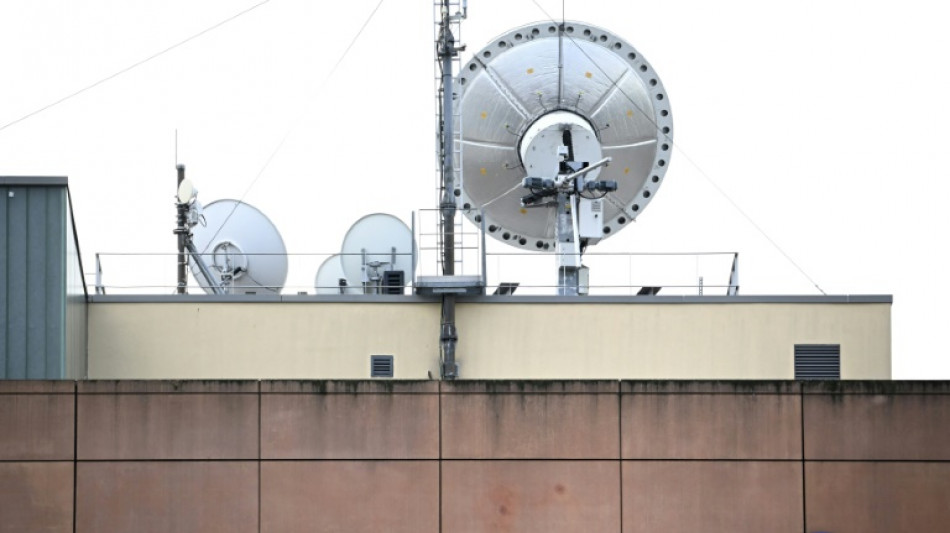
Moscow expels German journalists, Berlin denies closing Russia TV bureau / Photo: Tobias SCHWARZ - AFP/File

Russia on Wednesday said that it would expel two journalists from Germany's ARD national network in a like for like move after a Russian state broadcaster reported that its journalists had been ordered to leave Berlin.
Germany denied closing the Russian channel's bureau, however, and said it would reject ARD journalists being expelled "in the strongest possible terms".
Russian state-controlled media has faced broadcast bans and other restrictions since Moscow launched its Ukraine offensive, accused by Western regulators of spreading disinformation. Moscow has responded with what it calls tit for tat measures.
ARD said that its two employees were told to hand over accreditations by December 16, saying that this "marks a new low point in relations with Russia" where "pressure on Western journalists... has continued to increase" since Russia began its Ukraine offensive in February 2022.
"We have to adopt retaliatory measures towards journalists of the Moscow office of ARD," Russian foreign ministry spokeswoman Maria Zakharova said at a briefing.
She named the two ARD journalists who have to leave Moscow and give up their accreditations as correspondent Frank Aischmann and cameraman Sven Feller.
This came after Russian state broadcaster Channel One reported that its correspondent and cameraman working in Berlin had been ordered to leave, with a newsreader saying authorities are "closing the German bureau".
Zakharova said Moscow's ban on journalists was "in response to the ban by German authorities on Channel One correspondents staying and working in Germany".
She called this "the latest unfriendly actions by Berlin towards Russian media".
Zakharova said Russia would only consider accrediting new ARD correspondents if Germany creates the right conditions for Russian journalists and allows Channel One's Berlin bureau to fully restart its work.
Germany denied as "false" the claim that it had shut Channel One's German bureau, however.
German foreign ministry spokesman Christian Wagner said that Germany would reject any attempt to expel its journalists from Russia "in the strongest possible terms".
He also denied the Russian reports that its TV bureau and journalists were being sanctioned.
The "federal government has not closed the office of this broadcaster," he said, stressing that Russian journalists "can report freely" in Germany, although he did not make clear whether the two Russian journalists had to leave.
- 'Interests of security' -
Channel One correspondent Ivan Blagoi said on air on Wednesday that he and cameraman Dmitry Volkov were notified on Tuesday that they "must leave German territory in the first half of December".
He said they were told "the decision is motivated by the interests of security of the Federal Republic of Germany".
Channel One, which broadcasts in Russian, airs a daily evening news show called Time that is widely watched, especially by older viewers.
The channel showed part of a letter apparently from Germany immigration authorities saying that Blagoi's request to extend a residence permit had been refused and he must leave voluntarily or be deported.
No wording explaining the reasons for the decision was visible.
Blagoi said on air that he had received the letter "almost immediately" after his latest report on the case of German citizen Nikolai Gaiduk, who was detained by Russia's FSB security service in October.
The report aired on November 24 claimed, citing political analysts, that such acts ordered by Ukrainian security services were supervised by Western secret services including the CIA.
Channel One said its journalists "did not break German laws and met all necessary criteria".
It claimed that German authorities had said the channel was a "threat to the public order and security of Germany and the EU".
Germany accused the channel of spreading "propaganda and disinformation" among Russian-speaking migrants, justifying Russia's military incursion in Ukraine and calling defenders of Ukrainian democracy "Nazis", the report said.
Germany has a large number of residents who have emigrated from Russia and other ex-Soviet countries, many of them ethnic Germans.
Russia has previously responded to what it views as hostile moves against its media by denying foreign journalists accreditation and barring them from entry.
Shortly before troops entered Ukraine in February 2022, it shut down the Deutsche Welle broadcaster's Moscow bureau and revoked journalists' accreditations, in response to a ban on RT's Germany service.
Around 20 German media are accredited by Russia's foreign ministry, according to its website.
L.Bufalini--PV