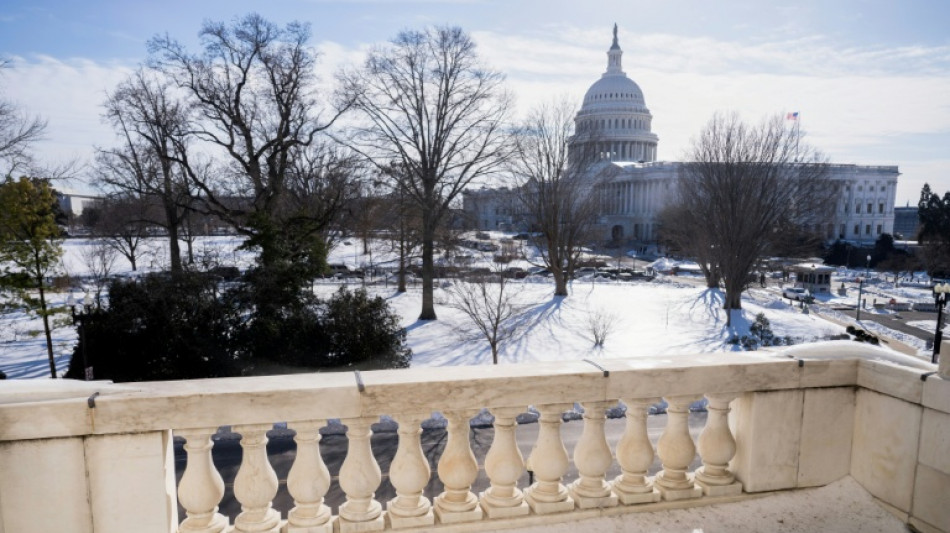
US Senate races to limit shutdown fallout as Trump-backed deal stalls / Photo: SAUL LOEB - AFP

US senators scrambled Friday to pass a deal backed by President Donald Trump to limit the effects of a government shutdown set to begin within hours, after Democratic anger over the killing of two protesters by immigration agents derailed funding talks.
Congress is racing against the clock as funding for large parts of the federal government expires at midnight, triggering a now unavoidable stoppage -- at least through the weekend -- even if senators manage to approve the compromise later in the day.
The fatal shootings of Alex Pretti and Renee Good in Minneapolis have become the central fault line in the budget fight, with Democrats refusing to support new funding for the Department of Homeland Security (DHS) without changes to immigration enforcement tactics, which they say have become dangerously aggressive.
Under the deal, negotiated by Trump and Senate Democratic leaders, Congress would pass five long-stalled spending bills to fund most of the federal government through the end of the fiscal year in September.
Funding for DHS -- which oversees immigration enforcement -- would be split off and covered instead by a two-week stopgap measure, giving lawmakers time to renegotiate the department's budget and oversight provisions.
Trump publicly endorsed the agreement and urged lawmakers from both parties to support it, signaling he wanted to avoid a second disruptive shutdown of his presidency.
Much of the US media interpreted the White House's new flexibility as a recognition that it needed to moderate its approach to deportations following the Minneapolis killings.
But Senate rules requiring unanimous consent to fast-track legislation quickly complicated the plan.
Late Thursday, Republican Senator Lindsey Graham of South Carolina blocked the package from advancing, forcing the Senate to adjourn without a vote.
Graham objected to language repealing a previously approved provision that would have allowed senators to sue the government for damages if their phone records were seized during a Justice Department investigation several years ago.
- 'Snags on both sides' -
He also raised concerns about funding DHS for only two weeks rather than the remainder of the fiscal year, arguing that the short extension would mean further uncertainty.
Republican Majority Leader John Thune told reporters there were procedural "snags on both sides," while Minority Leader Chuck Schumer blamed Republicans for preventing swift passage of the deal.
Even if the Senate approves the compromise on Friday, a brief shutdown is still inevitable.
The House of Representatives is on recess and not due back until Monday, meaning it cannot immediately vote on the legislation.
Speaker Mike Johnson said the House intends to move forward once it receives the package from the Senate, but internal divisions among Republicans could complicate that process.
A prolonged partial shutdown would affect a wide range of federal operations.
Although Congress has already passed six of the 12 annual funding bills, those measures account for only a small minority of discretionary spending. The remaining bills fund more than three-quarters of the government.
Democrats have remained united in opposing the DHS funding bill without reforms following the Minneapolis shootings, which have intensified scrutiny of federal immigration agents' conduct.
Party leaders say the two-week stopgap is intended to force negotiations over new guardrails, including tighter rules on warrants and limits on certain enforcement tactics.
Some Republicans have acknowledged the need for changes in the wake of the killings, while others argue Democrats are exploiting the funding deadline to constrain immigration enforcement.
Conservatives have signaled they will push their own priorities during the upcoming DHS talks, including measures targeting so-called "sanctuary cities" that refuse to cooperate with federal immigration enforcement.
With hours remaining before funding lapses, Senate leaders were still trying to secure agreement from all 100 senators to move the Trump-backed deal quickly.
I.Saccomanno--PV