'Rare, meaningful': North Korean football team ventures into South / Photo: Antony DICKSON - AFP

A women's football club will on Sunday be the first sports team from North Korea to visit neighbouring South Korea in eight years.
The isolated and nuclear-armed country's Naegohyang Women's FC will play the South's Suwon FC Women three days later in the Asian Champions League semi-finals.
AFP looks at the trip, the politics and the logistics.
- The politics -
The two Koreas remain technically at war because the 1950-53 conflict ended in an armistice, not a peace treaty.
Sports cooperation helped trigger a thaw in inter-Korean ties after North Korea sent athletes, cheerleaders and a high-level delegation to the 2018 Winter Olympics in the South.
The two Koreas also fielded their first unified Olympic team -- a joint women's ice hockey squad -- at the Pyeongchang Games.
Ri Sol Ju, the wife of North Korean leader Kim Jong Un, also visited South Korea in 2005 as part of a North Korean cheering squad for the Asian Athletics Championships.
But relations have sharply deteriorated since US-North Korea nuclear talks collapsed in 2019, with Pyongyang repeatedly declaring itself an "irreversible" nuclear state.
- The logistics -
The Naegohyang squad are set to arrive in South Korea by air from Beijing.
A total of 39 people will make the trip, according to South Korea's unification ministry, consisting of 27 players and 12 staff members.
They will stay at a hotel in Suwon, a city about 30 kilometres (20 miles) south of Seoul and where Wednesday's match will take place.
South Korea's Suwon FC squad will be based at the same hotel.
The dining areas and travel routes will be kept separate, local reports said, making encounters between the two sides unlikely.
The game will be at Suwon Sports Complex, which has a capacity of just under 12,000.
- The law -
Under South Korean national security laws it could be deemed illegal to own or brandish the North Korean flag or play its national anthem in public.
A separate law -- the Inter-Korean Exchange and Cooperation Act -- also requires South Koreans to obtain prior approval from the unification minister before contacting North Koreans by any means.
A government official told AFP the North Korean players' visit had received prior approval, meaning it would not be considered illegal for South Koreans to exchange simple greetings with them.
Under Kim Jong Un "sports are viewed not simply as entertainment, but as a measure of national capability", said Lim Eul-chul, a North Korea expert at the South's Kyungnam University.
Pyongyang is likely "aiming to showcase what it sees as its 'overwhelming superiority' through sporting performance, using it as an opportunity to send a strong message that it is superior to its 'hostile state' rival", he told AFP.
- The club -
North Korea are traditionally strong in women's football, especially at youth level, where they have won multiple World Cups in recent years.
Naegohyang FC, based in North Korea's capital Pyongyang, are a rising force in the women's game in the country, according to South Korea's unification ministry.
Founded in 2012, the club won the North Korean top flight in the 2021-22 season after defeating powerhouses April 25 Sports Club.
Naegohyang also beat Suwon -- their opponents on Wednesday -- 3-0 in the Champions League group stage in November.
As the Champions League is a club competition, national flags and anthems will not be used during the match.
- The fans -
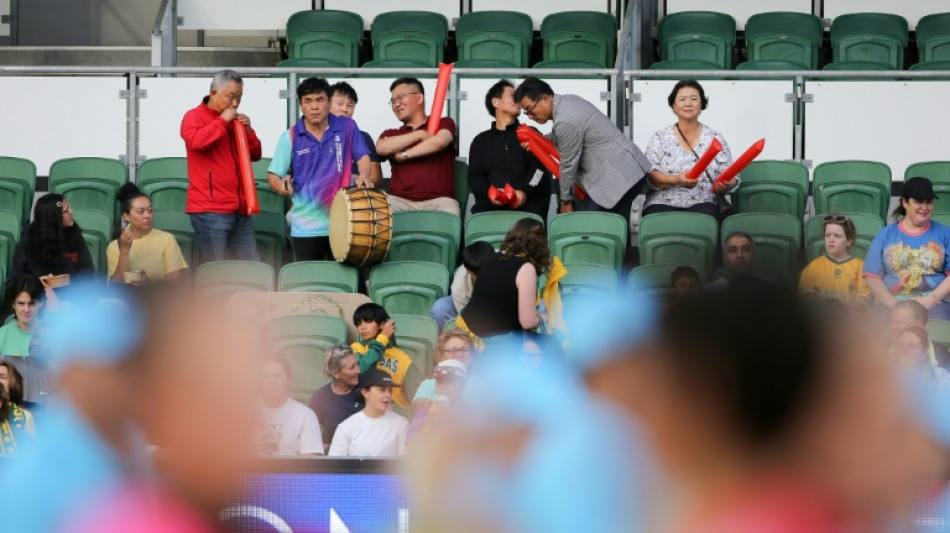
North Koreans are not typically allowed in South Korea so no fans will travel across the border.
The visiting team will though have plenty of support.
Seoul's unification ministry will provide 300 million won ($200,000) to support South Korean civic groups planning to cheer both teams at the match.
It will cover tickets, cheering supplies and banners, a ministry official said, adding the event could help promote "mutual understanding between the two Koreas".
About 2,500 supporters are expected at the game, according to the unification ministry.
A ministry official said civic groups would "largely be left to decide for themselves" what they chant, but the government will give guidelines given the "special nature" of the event.
"We see it as a rare and meaningful exchange between young South and North Koreans," Hong Sang-young, secretary general of the civic group Korean Sharing Movement, told AFP.
"Political slogans or messages could cause misunderstandings, so we intend to focus on football itself and on supporting young people from both Koreas sharing the same space."
E.M.Filippelli--PV