
GA-ASI Flies Government Reference Autonomy Stack at Orange Flag 25-1

Government-Supplied Pilot Vehicle Interface Used for Unmanned Combat Air Vehicles
SAN DIEGO, CALIFORNIA / ACCESS Newswire / March 4, 2025 / General Atomics Aeronautical Systems, Inc. (GA-ASI) achieved another major milestone in the development of Unmanned Combat Air Vehicles (UCAVs) by flying U.S. government-provided autonomy software aboard a company-owned MQ-20 Avenger®. The demonstration was part of the Air Force Test Center's all-domain test series called Orange Flag 25-1, which took place Feb. 19-21 at Edwards Air Force Base, California.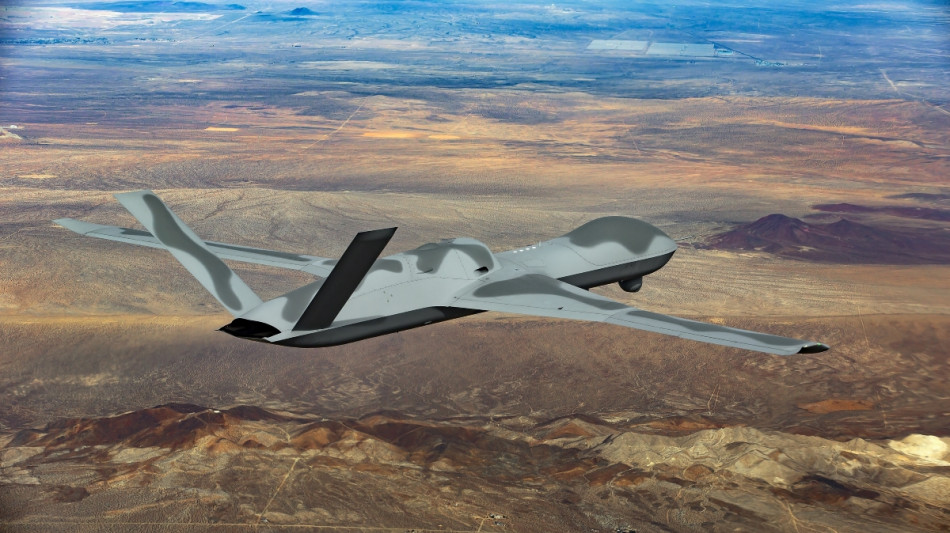
The demonstration included the use of a government-provided Pilot Vehicle Interface (PVI), showcasing GA-ASI's commitment to advancing its UCAV ecosystem through collaboration with partners and government entities and integrating cutting-edge technologies. Avenger is a jet-powered UAS used extensively by GA-ASI as a test bed for future Autonomous Collaborative Platforms.
GA-ASI also demonstrated the ability to rapidly swap between autonomy systems midflight over Proliferated Low Earth Orbit (PLEO) satellites utilizing an autonomy product from Shield AI.
Orange Flag 25-1 is part of the larger Orange Flag Evaluation and Demonstration Event series. This event brought together various stakeholders to test and validate advanced aerospace technologies in realistic operational scenarios.
The government-provided autonomy software - known as a reference autonomy stack - was integrated into the GA-ASI Avenger and demonstrated autonomous flight operation capabilities focused on conducting air-to-air engagements. The government-provided PVI enabled seamless control and monitoring of the autonomy stack, highlighting the interoperability and flexibility of GA-ASI's UCAV ecosystem. The Shield AI stack demonstrated autonomy skills for safe administrative phases of flight.
What the flights proved was that GA-ASI aircraft can quickly go from company-written software, to government-provided, to other vendors' software as needed. This reinforces that the new generations of GA-ASI's UCAVs can seamlessly get upgrades as fast as developers finish them. Just as a mobile phone can get new and better features with each update, so too can new UCAVs get more capable and more versatile.
"This demonstration marks a significant achievement in our ongoing efforts to operationalize autonomy for UCAVs," said GA-ASI Vice President of Advanced Programs Michael Atwood. "Flying the government reference autonomy stack at Orange Flag 25-1 and utilizing the government-provided PVI underscores our commitment to delivering robust and adaptable autonomy solutions for the warfighter. We especially appreciate and salute the support we received from the 309th Software Engineering Group."
The successful flight at Orange Flag 25-1 further validates GA-ASI's dedication to maturing its open standards-based autonomy software ecosystem. By adhering to government-owned and maintained standards, GA-ASI ensures rapid integration of best-of-breed capabilities from third-party providers, enhancing the overall operational effectiveness of UCAV platforms.
GA-ASI continues to demonstrate its commitment to advancing autonomy for UCAVs through a series of flight tests and collaborations with government and industry partners. These efforts are aimed at developing an autonomy infrastructure that enables rapid integration and validation of tactical software applications while maintaining safety of flight and providing warfighters with the most advanced capabilities possible. GA-ASI has been selected by the U.S. Air Force to build and fly the Collaborative Combat Aircraft (CCA).
About GA-ASI
General Atomics Aeronautical Systems, Inc. (GA-ASI), an affiliate of General Atomics, is a leading designer and manufacturer of proven, reliable RPA systems, radars, and electro-optic and related mission systems, including the Predator® RPA series and the Lynx® Multi-mode Radar. With more than eight million flight hours, GA-ASI provides long-endurance, mission-capable aircraft with integrated sensor and data link systems required to deliver persistent situational awareness. The company also produces a variety of sensor control/image analysis software, offers pilot training and support services, and develops meta-material antennas.
For more information, visit www.ga-asi.com.
Avenger, Gray Eagle, Lynx, Predator, Reaper, SeaGuardian, and SkyGuardian are trademarks of General Atomics Aeronautical Systems, Inc., registered in the United States and/or other countries.
Contact Information
GA-ASI Media Relations
[email protected]
SOURCE: General Atomics Aeronautical Systems, Inc.
View the original press release on ACCESS Newswire
L.Bufalini--PV