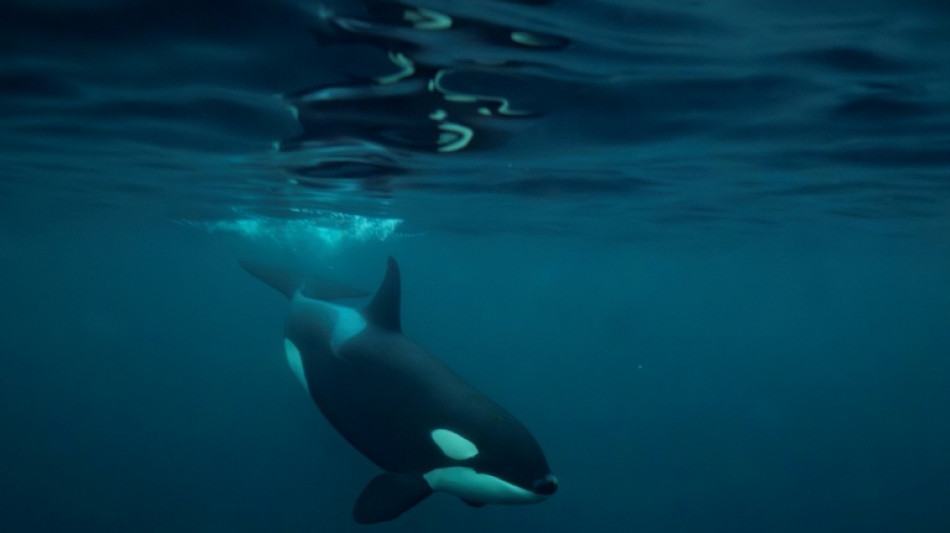
Killer whales: orcas blow fish to bits 'for fun', study finds / Photo: Olivier MORIN - AFP/File

A group of killer whales have been documented blowing a sunfish to bits in an unusual underwater escapade offering never-before-seen insights into orca behaviour, according to research released Thursday.
Video released by the US-based NGO Beneath The Waves shows one orca holding the tail of a sunfish, with its fellow whale then charging with full force into the rotund mola, which explodes into pieces.
The sunfish is already dead -- this isn't an elaborate murder ritual.
Instead, it might be an attempt to turn the fish into smaller bite-sized chunks, researcher Kathryn Ayres said.
"Or it could also just be for fun. Orcas are known for playing with their food," she explained.
"Orcas often tear apart prey and share it with other members of the group, including calves and juveniles."
The antics were documented on two occasions in 2024 and 2025 off the Gulf of California, according to the research published in the peer-reviewed Frontiers in Ethology.
Mark Peter Simmonds, director of science at OceanCare, likened it to "human formal meals where socialising as well as nutrition are in play".
"Perhaps it is similar to the time when the lead human at a formal meal would carve up the roast," he told AFP.
Killer whales are highly intelligent apex predators and have been known to play with their prey and deploy sophisticated tactics to ensnare them.
They have been documented engaging in "wave washing" -- cooperating to create choppy waters that knock seals off sheets of ice so they can be more easily captured and eaten.
They have also been seen wearing dead salmon as hats for reasons that remain a mystery.
And they use tools -- research last year showed a critically endangered population of orcas in the Salish Sea breaking off pieces of seaweed to rub and groom each other.
"It just really shows us how intelligent orca are," Rebecca Wellard, a scientist at Western Australia's Curtin University who was not involved in the research, told AFP.
"I think I hope that gives people more respect for complex creatures that are great predators in their environment."
The hapless sunfish can weigh up to 2,000 kilograms and is distinct for both its size and peculiar shape featuring a flattened body and fins.
They don't commonly explode, the research points out.
"They're a heavy, bony fish, so it must be some severe ramming," Wellard said.
E.Magrini--PV