Pallade Veneta - The Cupra Raval will be launched in 2026

The Cupra Raval will be launched in 2026


The Cupra Raval will be launched in 2026

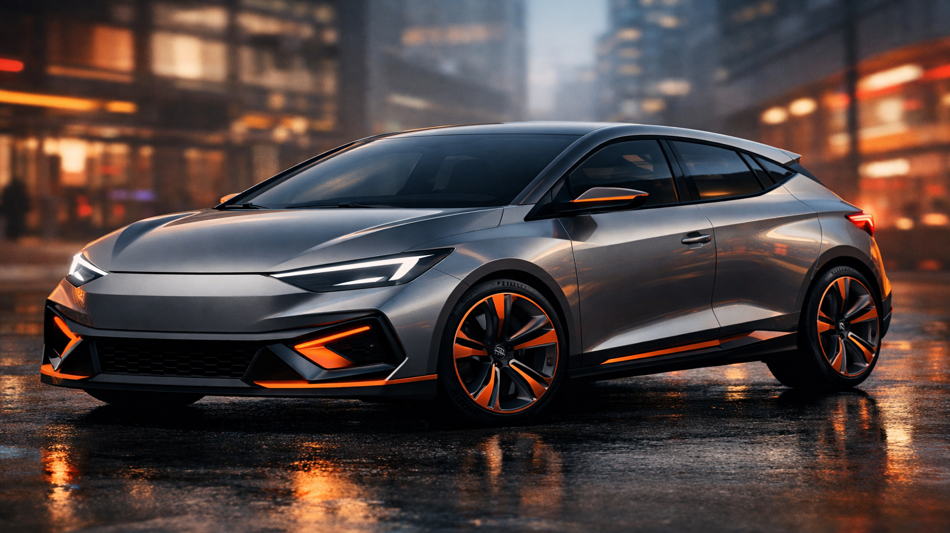
The Cupra Raval translates Cupra’s rebellious spirit into an urban electric hatch. Derived from the UrbanRebel concept, it rides on the Volkswagen Group’s MEB+ architecture and will be built in Martorell. Launching in early 2026, the Dynamic and Dynamic Plus versions deliver 210 hp and up to 450 km of range, while the VZ Extreme pushes output to 226 hp and adds an electronic limited‑slip differential and adaptive chassis tuning.

Two battery sizes—expected around 38 kWh and 56 kWh—will enable sub‑7‑second 0–62 mph acceleration. Styling borrows from the edgy UrbanRebel with angular headlamps, bold creases and copper‑coloured details. Inside, a driver‑focused cockpit features configurable digital instruments, a large infotainment screen and an optional 12‑speaker Sennheiser audio system.

Change text size:

Safety technology includes Travel Assist, 360‑degree cameras and smart parking assistance. Pricing is expected to start around €26,000, positioning the Raval against the Peugeot e‑208 and Renault 5.

Featured

All-new Ioniq 3 coming in 2026

Hyundai is preparing to launch the Ioniq 3, a compact EV that will slot below the Ioniq 5. Inspired by the Concept Three unveiled in 2025, the production car will ride on a 400‑volt version of the E‑GMP platform and feature pixelated LED lighting, active aero shutters and a lounge‑like cabin. Two battery options are expected: a 58.3 kWh pack yielding around 270 miles of range and an 81.4 kWh pack delivering roughly 375 miles (WLTP). A front‑mounted motor producing about 201 hp should propel the car to 60 mph in roughly 7.5 seconds with a top speed near 105 mph. Vehicle‑to‑load bidirectional charging will be included.Hyundai is also reportedly developing a high‑performance Ioniq 3 N with dual motors and 288 bhp for a sub‑six‑second 0–60 mph time. The infotainment system will debut the new Pleos software, enabling over‑the‑air updates and Apple CarPlay Ultra. Designers intend to create a “living room” interior with flexible seating and sustainable materials.

New Twingo e-tech is at the starting line

Renault has reimagined its iconic Twingo as a purely electric city car. Built on the AmpR Small platform, the new model uses a lithium‑iron‑phosphate battery with 27.5 kWh of usable capacity and an 80 hp motor. This combination gives a WLTP range of about 163 miles (approximately 263 km). Standard charging is via a 6.6 kW AC charger, with options for 11 kW AC and 50 kW DC; the latter takes the battery from 10 to 80 percent in 30 minutes. A one‑pedal mode delivers strong regeneration for urban driving.The Twingo E‑Tech is slated to hit the European market in early 2026 with a target price below €20,000. Early adopters can secure an R Pass from December 2025, gaining priority ordering and perks such as a 1:43 scale model and early test drives. Inside, a seven‑inch digital instrument cluster is paired with a ten‑inch infotainment screen running Google services and voice control. Sliding rear seats allow the boot to expand to 360 litres, and up to 24 driver‑assistance systems—including automated emergency braking and lane‑keeping—make this tiny EV surprisingly sophisticated.

New Ypsilon and Ypsilon hf

Lancia’s revival begins with an all‑new Ypsilon supermini. Built on Stellantis’s CMP platform, it comes as a battery‑electric or 48‑volt mild‑hybrid. The electric Ypsilon uses a 51 kWh battery and a front‑mounted motor rated at 115 kW (156 hp), delivering up to 403 km of WLTP range and more than 500 km in urban use. DC fast charging takes the battery from 20 to 80 percent in 24 minutes, or adds 100 km of range in 10 minutes, while consumption is rated at 14.3–14.6 kWh/100 km. The mild‑hybrid pairs a 1.2‑litre three‑cylinder with a 48‑V system to produce 100 hp and achieve 0–100 km/h in 9 seconds.The cabin is co‑created with furniture maker Cassina, combining sustainable textiles with a minimalist design. Lancia’s SALA (Sound Air Light Augmentation) interface manages lighting, climate and media across dual displays. Half of the surfaces passengers touch are made from recycled or eco‑friendly materials. Outside, the Ypsilon wears a reinterpretation of Lancia’s grille, round Stratos‑inspired rear lights and clean lines.

New id.Polo comes electric

Volkswagen’s ID.Polo ushers the iconic Polo name into the electric age. Pre‑sales begin at the end of April 2026. Built at the Martorell plant in Spain, the compact five‑door model is the first production car on VW’s updated MEB+ platform. Pricing will start below €25,000.Customers can choose between 37 kWh and 52 kWh batteries powering 85 kW, 99 kW or 155 kW motors; the GTI variant with 166 kW arrives later. The larger battery delivers up to 450 km of range and supports DC charging at up to 130 kW. New assistance systems include Travel Assist with traffic‑light and stop‑sign recognition.

Change text size: